
THAILAND · NATIONAL COORDINATION · EXECUTIVE VISITS · VILLAS & ISLAND STAYS
Bodyguard Services in Thailand for Executives, Families & Island Stays
R&H Global Protection provides discreet bodyguard and executive protection across Thailand for executives, private families and long-term clients. Programmes can connect Bangkok business, Phuket or Koh Samui stays, Chiang Mai travel and other confirmed city or island stages, with the local delivery structure, drivers and destination-specific logistics confirmed before deployment.
Part of R&H Global Protection’s international bodyguard services and Thailand protection capability.
Thailand Personal Protection at a Glance
BKK · DMK · HKT · USM · CNX · U-TapaoBangkok and eastern commitments
Executives whose Thai visit connects meetings, conferences and more than one business destination.
Private and family support
Parents, children and staff combining city, resort and island stays.
Arrivals and dedicated driving
Personal reception and vehicle responsibilities are separately defined for the booked gateway and actual programme.
Retained and onward requirements
Continuing support is reviewed for personnel fit, relief and the resources needed at each accepted destination.
Direct answer · hiring a bodyguard in Thailand
Can You Hire a Private Bodyguard in Thailand?
Yes. R&H Global Protection coordinates private bodyguard and executive protection across Thailand for executives, families and private clients. Send the dates, protected people, destination sequence, airports, villa or hotel requirements and any island or marine stage so the personal officers, drivers and Thai delivery roles can be confirmed.
R&H Global Protection · +972-55-9724475 · info@global-protection.net. For a Thailand quotation, provide the dates or duration, protected people, complete destination sequence, booked airports and whether dedicated drivers, villa security or multiple simultaneous family movements are required.
Bodyguard · Executive Protection · Close Protection
What Does a Bodyguard in Thailand Cover?
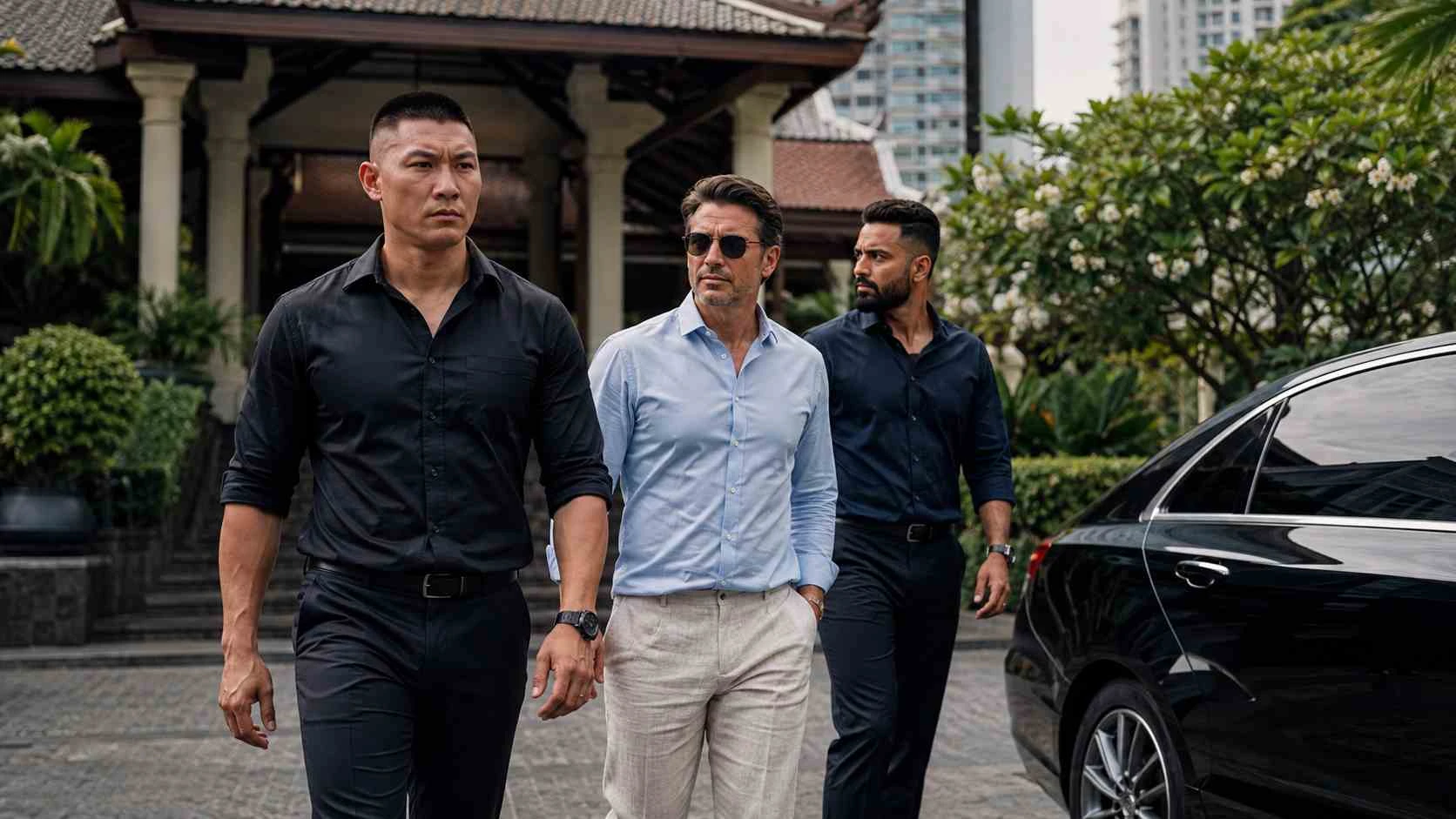
With R&H Global Protection, the core Thailand bodyguard role is personal accompaniment and close protection of the named principal during each agreed stage. A programme may connect Bangkok meetings, resort or villa stays, airport receiving and private family movements while keeping one client brief.
A bodyguard does not automatically provide driving, continuous villa guarding, event-wide security or maritime operations. Each Bangkok, Phuket, Koh Samui, Koh Phangan, Chiang Mai or other stage is separately checked for local transport, accommodation, working hours and delivery requirements.
Thailand Protection Planning
Executive Protection in Thailand for Business Visits & Multi-Destination Family Stays
Executive protection in Thailand can connect a Bangkok business phase with a Phuket villa, a Koh Samui stay or a northern visit. The same client may move from public meetings to private-family time, changing both the protective need and the supporting resources. The national plan preserves useful preferences while each destination receives its own personnel, transport and duty review.
Plan the city sequence before selecting the team. Personal protection, local driving, accommodation and island receiving arrangements remain distinct, so continuity does not depend on one officer or vehicle covering incompatible duties.
Bangkok and eastern commitments
Corporate appointments, conferences and eastern business visits should be distinguished from the family’s private time. The principal’s exposure guides the personal detail; the actual destination, airport and working period guide the supporting resources. A city booking does not automatically cover later regional duties.
Phuket villas and Samui stays
A longer private stay may involve children, staff, visitors and independently moving adults. Identify who requires personal protection and whether a residence needs fixed coverage. The household relationship, personnel introduction and relief pattern should be defined rather than left to an informal live-in arrangement.
Koh Phangan and marine receiving
An island stage using a vessel requires an actual operator and receiving contact, rather than an airport-style pickup assumption. Personal accompaniment and marine transport have different responsibilities. Review the passengers, accommodation and staffing for the next destination before treating national continuity as confirmed.
Chiang Mai and regional programmes
The northern part of a visit may combine business, private accommodation and regional journeys. Review the principal’s actual needs rather than reuse the Bangkok daily structure. Drivers, receiving personnel, duty and relief are separately considered for that stage while relevant client preferences remain available.
Thailand Protection Services
Close Protection in Thailand: Personal and Supporting Services
Build your Thailand protection arrangement from distinct personal and supporting services. The options below connect the client’s priorities with the right officer, preparation and additional resources; the agreed proposal identifies what is included.
Executive bodyguard services across Thailand
Discreet personal protection for business leaders, investors and senior visitors within the agreed national programme. The client’s concerns and exposure guide officer selection. Corporate meetings, conferences and private hospitality receive a consistent personal brief while local resources are confirmed for each destination.
Multi-Destination Family Protection
Discreet support for families combining city appointments with resorts, villas or island stays. Identify protected relatives and separate activities at each stop, then allocate personal officers accordingly. Parents, carers and property teams retain their own roles while the agreed client brief continues between destinations.
Airport and destination reception
Plan the actual BKK, DMK, HKT, USM, CNX or U-Tapao flight within the relevant service window. The receiving officer, passengers, luggage and supporting transport are identified for that stop. Restricted access and premium assistance are separate, and marine stages require their own non-airport arrangements.
Security Drivers and Local Transport
Dedicated drivers and suitable vehicles can support the accepted city or resort programme. The vehicle plan follows passengers, luggage and the actual gateway at each stop. Domestic flights and marine transfers have separate operators and receiving arrangements; one driver is not presumed to cover every destination.
VIP guests and public appearances
A recognisable principal may have business, event and private commitments across several Thai destinations. Review the actual exposure with management and keep the visible presence proportionate. The proposal identifies personal coverage and any commissioned preparation without promising unverified specialist or armed capabilities.
Conference and private-event protection
Support named speakers, hosts or invited guests through agreed event duties. Each organiser controls credentials, venue procedures and accompanying-personnel permissions. General event screening, crowd management and security for other attendees are separate tasks, whether the event is in a city, resort or island property.
Female protection officer requests
A female bodyguard in Thailand can be requested for private accompaniment, family preferences or other appropriate personal requirements. Availability and experience are matched to the actual dates and destinations. Thai personnel eligibility and the proposed role must be confirmed rather than inferred from overseas training.
Villa and residential-security coordination
Longer resort or villa stays can include separately staffed property duties where needed. The household contact, visitor responsibilities and periods of mobile accompaniment should be clear. A retained officer sleeping at the property does not provide continuously active guarding for the residence or the whole family.
Protective Preparation and National Coordination
Review the principal’s concerns, public engagements and city sequence before assigning personnel. Agree proportionate preparation, communications, reporting and responsibilities for appropriate local assistance. Each destination receives a fresh resource review while the management contact retains the relevant overall client picture.
Long-term executive and family programmes
Retained support can combine personnel matching, an introduction, management contact and periodic review. Set sustainable duty, relief and reporting arrangements for each base. Domestic travel, island receiving, accommodation and any later international stage are expressly considered before the overall programme is confirmed.
Client Profiles
Who Uses Bodyguard Services in Thailand?
Clients seeking protection in Thailand have different professional, family and private needs. The arrangement follows the people requiring coverage and the activities they undertake, including any schedules that run independently.
Corporate principals
Executives whose Thai visit connects meetings, conferences and more than one business destination.
Private families
Parents, children and staff combining city, resort and island stays.
Family offices
Representatives coordinating retained personnel, private information and household preferences.
Investors and advisers
Clients balancing confidential business with private hospitality.
Public figures
Recognisable visitors with appearances, events and private downtime.
Private-event guests
Named hosts or invitees whose personal detail differs from whole-event security.
Long-stay villa households
Families needing continuity, relief and separately scoped residence duties.
Island and regional travellers
Clients whose itinerary changes between air, road and marine receiving arrangements.
Israeli-led planning · Assignment-specific delivery
Protection Planning Adapted to Thailand
Thailand planning begins with the complete route. Bangkok corporate work, Phuket or Koh Samui family stays, island transfers and Chiang Mai travel create different vehicle, accommodation and working-period requirements.
The brief identifies who protects each person, which driver or operator owns each movement, how villa or event responsibilities are separated and where a new destination requires fresh staffing or local-delivery confirmation.
Longer programmes need personnel fit, household introductions and a sustainable duty and relief structure. Thai regulated provider and personnel roles are confirmed independently of international planning or foreign qualifications. Review accommodation, domestic travel and significant itinerary changes before a new stage is accepted; continuity should not depend on unverified permissions or unlimited officer hours.
Thailand Local Context
Thailand Protection Across Capital, Resort, Island & Northern Programmes
City meetings, villas, islands and northern stays place different demands on a national programme. The client brief remains consistent while airport reception, local transport, accommodation and personal duties are rebuilt for each destination.
Bangkok and Pattaya business visits
Bangkok corporate appointments and an eastern business or hospitality stage can require different driving, host and working-period arrangements. Keep the executive’s personal needs central while reviewing the actual local programme. A later Pattaya visit is not automatically included because it follows the original city assignment.
Phuket and Koh Samui private stays
Villa, resort and family routines benefit from a discreet personnel introduction and clear household contact. Independently moving family members may need additional personal officers, while a residence requiring fixed coverage needs its own staffing. Private accommodation is not a reason to assume one officer can provide continuous protection.
Koh Phangan marine and event stages
An itinerary involving marine travel must specify the actual origin, vessel operator and receiving arrangements. Personal officers do not replace the operator’s role, and event permissions remain with the organiser. Accommodation, local transport and working periods are reviewed for that island stage rather than copied from an airport booking.
Chiang Mai and northern continuity
The northern programme may combine private stays, conferences and regional road journeys. Establish the actual principal needs and receiving contacts for those commitments. National coordination preserves relevant preferences while personnel, driving, relief and any new accommodation requirements are considered for the next destination.
Bangkok and eastern commitments
Phuket villas and Samui stays
BKK · DMK · HKT · USM · CNX · U-Tapao
Conferences, private celebrations and island hospitality programmes.
The agreed Thai city, island and regional sequence.
The final plan uses your confirmed properties, hosts and programme. Additional destinations and specialist requirements are reviewed before they are included in the Thailand assignment.
The Assigned Team
Professional Standards for Your Thailand Detail
The proposed team is selected for your Thailand requirements, with professional fit, communication and responsibilities reviewed before service. Request the relevant provider and personnel documentation as part of that discussion.
R&H Global Protection matches Thailand personnel to the actual stage: corporate discretion in Bangkok, private-family conduct at resorts or villas and practical handoffs for island or northern travel. Personal officers, drivers and local providers are assigned by responsibility rather than convenience.
A national Thailand programme may require corporate discretion in Bangkok and a more private family approach at a villa or island resort. Review the proposed personnel’s relevant experience, communication and ability to work with hosts, while matching each assignment to its actual personal-protection duties.
Confirm the Thai provider, eligible personnel and permissions applicable to each accepted security function. International coordination and foreign training do not automatically establish local guard eligibility. Work authorisation, any weapon-related request and separately staffed property duties require their own current checks before the programme is confirmed.
The principal’s preferred language and Thai host communication are agreed separately. State English-speaking or other language requirements alongside the destinations, allowing officer and liaison capability to be confirmed for each stage rather than assumed throughout the country.
The personal officer accompanies the client where agreed and permitted, while a dedicated driver retains responsibility for the vehicle. Establish passengers, luggage, waiting and the working period before the Thailand programme begins, including any independent family transport.
An authorised client contact controls the distribution of private information. Share only the details needed for each assigned duty, with more sensitive documents handled through an agreed channel. Household addresses, confidential appointments and family routines are not circulated routinely to every supporting supplier.
Set duty periods, breaks and relief around the accepted programme. Longer assignments need a sustainable working pattern and clear handovers. An officer staying at a residence overnight is not continuously alert for every hour; round-the-clock requirements need separately planned staffing.
Hiring a Bodyguard in Thailand
How to Arrange Close Protection in Thailand
Describe the personal requirement
Send the Thailand dates, protected people and the full sequence of cities, resorts or islands rather than only the first destination.
Identify the booked arrivals
Confirm each booked airport or marine transfer, the accommodation type and the first commitment at every stage.
Clarify independent commitments
Identify independent family schedules, villa requirements, events and any island or northern journey that may need additional officers or drivers.
Review the proposed team
Separate personal protection from driving, fixed property coverage, event security and transport-operator responsibilities.
Approve the complete quotation
Review the Thai provider and personnel arrangements for each accepted security function, along with working language and local logistics.
Complete the private planning brief
Approve a destination-by-destination quotation covering officer days, drivers, accommodation, travel expenses, relief and payment terms.
A Bangkok meeting programme followed by a Phuket villa stay and a Samui-to-Phangan continuation has three different resource pictures. The quote should distinguish personal officers, local drivers, household duties and marine transport. A national officer-day range does not absorb flights, vessels, accommodation or continuously staffed property coverage.
Thailand Service Models
Choose the Right Protection Model in Thailand
Select the model around your Thailand priorities: the people needing protection, the duration and the responsibilities that must run at the same time. Each proposal identifies personal coverage, additional support and a realistic working pattern.
- Defined Thai executive visit Personal coverage for the named principal’s accepted destinations, meetings and service periods.
- Officer with destination-specific drivers A continuing personal brief linked to separately assigned vehicles and driving responsibilities at each stop.
- Family with simultaneous programmes Additional personal officers where protected family members separate between activities or locations.
- Retained executive or villa household For a retained family or executive programme, agree the officer profile, household introduction, management contact and reporting expectations. Build in working periods and relief, with reviews when the client changes destination or routine. Domestic travel, receiving vehicles, accommodation and independent property posts are specified for the stages where they are needed.
- Mobile detail with independent residence cover Separately staffed property duties while personal officers accompany the family or principal.
- Multi-city and island programme One controlled client brief with reviewed air, road or marine receiving arrangements and locally appropriate resources.
Thailand Bodyguard Cost · Written Quotations
How Much Does a Bodyguard in Thailand Cost?
R&H Global Protection’s indicative Thailand planning range is USD 800–1,500 per officer per day. The written quotation confirms the actual duty window, personnel, local delivery structure, transport and any additional family, residence, event or regional costs.
The officer-day depends on the actual destination: Bangkok business, a resort stay and an island stage can have very different working periods.
Family members moving independently across villas, resorts or cities may require additional personal officers rather than one national detail.
Conferences, private events and resort programmes can require destination-specific host preparation instead of a single countrywide assumption.
Drivers are priced by stage, including airport, road and island receiving; one vehicle is not assumed to follow the client across Thailand.
Long-term villa or family programmes may need personnel introductions, relief and fixed property staff separate from mobile protection.
Domestic flights, marine transfers, accommodation and inter-destination deployment costs are itemised for the actual Thailand route.
Team Configurations for Thailand Protection
These configurations describe different responsibilities, not interchangeable price packages. The proposal identifies the actual people, working periods and supporting resources included.
The officer range does not automatically include a driver, vehicle, additional preparation, travel, accommodation or separate property coverage. The written breakdown identifies included duties, supporting expenses and applicable tax treatment for the actual requirement.
Confirm the Thailand service window, dates and any longer travel or event duties before committing. Extra personal coverage and driver waiting are different cost items and should remain visible in the proposal.
Request an itemised Thailand proposal for the complete requirement. The quoted rate belongs to the agreed R&H Global Protection scope; it is not presented as a universal local market price or unlimited 24-hour package.
Confirm payment, mobilisation and cancellation conditions before booking. An enquiry does not reserve personnel, guarantee availability or establish a deployment time.
Request Your Thailand Bodyguard QuoteNational Coverage
Personal Security in Thailand and Your Onward Itinerary
The service area follows the accepted client programme. Each city, island and regional stage is assessed individually; listing a destination does not guarantee availability, unrestricted access or the same delivery arrangement throughout the journey.
Thailand
Protection in Thailand connects the accepted appointments, private needs and arrival arrangements with the appropriate supporting resources. Plan each city and regional stage around one national brief, with local staffing, receiving contacts and working periods agreed for every stop.
The actual appointments and private requirements accepted in the proposal.
The booked gateway, personal receiving duty and separately defined transport.
Personal accompaniment and any independent property-security requirement.
Named principals and organiser permissions, not automatic whole-event security.
Fresh receiving contacts, resources and working-period review for subsequent stages.
These official sources support the regulatory or event context described above. They do not certify a proposed operator. Confirm the current provider, individual permissions and host instructions for the actual assignment; event attendance remains subject to the relevant organiser’s rules.
Why R&H Global Protection
Why Choose R&H Global Protection in Thailand?
R&H Global Protection manages Thailand as a multi-destination protection programme rather than treating every city, resort and island as the same assignment. The client brief remains consistent while officers, drivers, accommodation, villa roles and local delivery are confirmed for each stage.
A national plan rather than a city copy
Bangkok business, northern visits and island stays are considered as different phases of the client’s travel. Each destination has its own useful preparation and resource decisions.
Continuity of personal preferences
An agreed contact keeps relevant preferences and instructions connected as the journey progresses. Sensitive details are shared only with the people who need them for the next duty.
Family and villa responsibilities clear
Separate family activities can require additional personal officers. A villa’s fixed post is independently staffed where needed, rather than being assigned to an officer accompanying outings.
Realistic island and road transitions
Flights, marine operators and receiving drivers have separate responsibilities. The proposal identifies where personal coverage continues and which travel costs or overnight arrangements are required.
Retained support with planned relief
Introductions, defined working patterns and periodic reviews help an extended programme remain workable across changes in household routines or destinations.
Destination-specific cost clarity
The national officer range is a planning guide, not an all-inclusive countrywide package. Drivers, accommodation, extra officers and travel between stops are identified in the written quotation.
Our family spent almost three months in Thailand, dividing our time between Bangkok and Phuket with additional private travel during the stay. Because we were travelling with children, we wanted security that was professional but also relaxed enough to work around normal family life. R&H Global Protection understood this immediately. The officer helped manage airport movements, restaurants, shopping, beach days, private boat arrangements and evening events without making us feel as though every activity had become a security operation. After several weeks, he understood our routine and preferences very well, which made everything much easier. The protection was always present when needed but never intrusive. For a longer family stay, that balance was extremely important to us.
Published company experience · R&H leadership and operating approach · Editorial standards and accountability
International Protection Continuity
International Protection Beyond Thailand
For travel beyond Thailand, R&H Global Protection can preserve the client brief while confirming a new receiving team, vehicle plan and local requirements for the next country.
Relevant protection destinations:
Singapore, Hong Kong, Tokyo, Mumbai.
More protection destinations:
Monaco, New York, Paris, Madrid, Zurich, Milan.
Thailand · Confidential Protection Enquiry
Hire a Bodyguard in Thailand
Start with Thailand, dates or approximate duration, the number of protected people, broad service needs and any transport requirements. Include the intended city or regional sequence. A preferred contact method helps us discuss suitability and next steps. Keep passports, exact private addresses and detailed threat information out of the initial enquiry; agree an appropriate channel before sending sensitive material.
WhatsApp opens a draft for you to review and send. Opening it does not book protection or reserve personnel. Prefer a web form? Use our contact page.
Thailand Bodyguard Questions
Frequently Asked Questions About Protection in Thailand
Answers about personal-protection scope, costs, local delivery, family needs and the responsibilities to confirm before accepting a proposal.
How much does a bodyguard in Thailand cost?
R&H Global Protection’s indicative Thailand planning range is USD 800–1,500 per officer per day. Final pricing depends on duty hours, team size, transport, supporting resources and any regional, event or long-term requirements.
What does executive protection in Thailand include?
Executive protection in Thailand can combine personal protection, advance planning, host coordination and dedicated transport around the agreed itinerary. Driving, residence security, venue-wide security and specialist roles are separately scoped.
Can one protection plan connect Bangkok, Phuket and Koh Samui?
A multi-destination requirement can be reviewed as one client programme. Personal preferences and the management contact can remain consistent, while each stop receives its own staffing, transport and accommodation review.
How is a Koh Phangan stage different from an airport arrival?
A marine stage needs the actual origin, vessel operator and destination receiving contact.
Can I request a dedicated security driver in Thailand?
Yes. R&H Global Protection can coordinate a dedicated driver and suitable vehicle with the Thailand protection detail. The driver remains responsible for transport while the bodyguard stays focused on the principal.
Can you arrange long-term family protection in Thailand?
Yes. A long-term Thailand programme can include personnel matching, introductions, agreed duty hours, relief and management review. Separate family movements, residence posts and travel stages are staffed independently where required.
Can a female bodyguard or a particular working language be requested?
Yes. Female officers and preferred working languages can be requested for Thailand, subject to suitable availability and lawful local delivery. Confirm the assigned officer’s actual experience and language capability before deployment.
How is the local delivering arrangement checked for Thailand?
The provider, eligible personnel and actual locally regulated functions must be confirmed for each assignment. A visiting international officer’s background does not automatically establish authority to perform Thai guard duties.
Are protection officers in Thailand armed?
The standard Thailand planning approach is unarmed. Any weapon-related requirement needs a separate current legal and operational review and cannot be inferred from the client’s request or an overseas permit.
Does long-term villa protection cover the whole property around the clock?
Not automatically. Personal protection follows the protected client. Continuous villa or residence security requires separately assigned residential personnel and sufficient shifts to cover the requested hours. The written proposal confirms the number of officers, posts, duty periods and relief required.