
Police & Government
Professional organisational development for law-enforcement, government security, protective and supervisory teams.
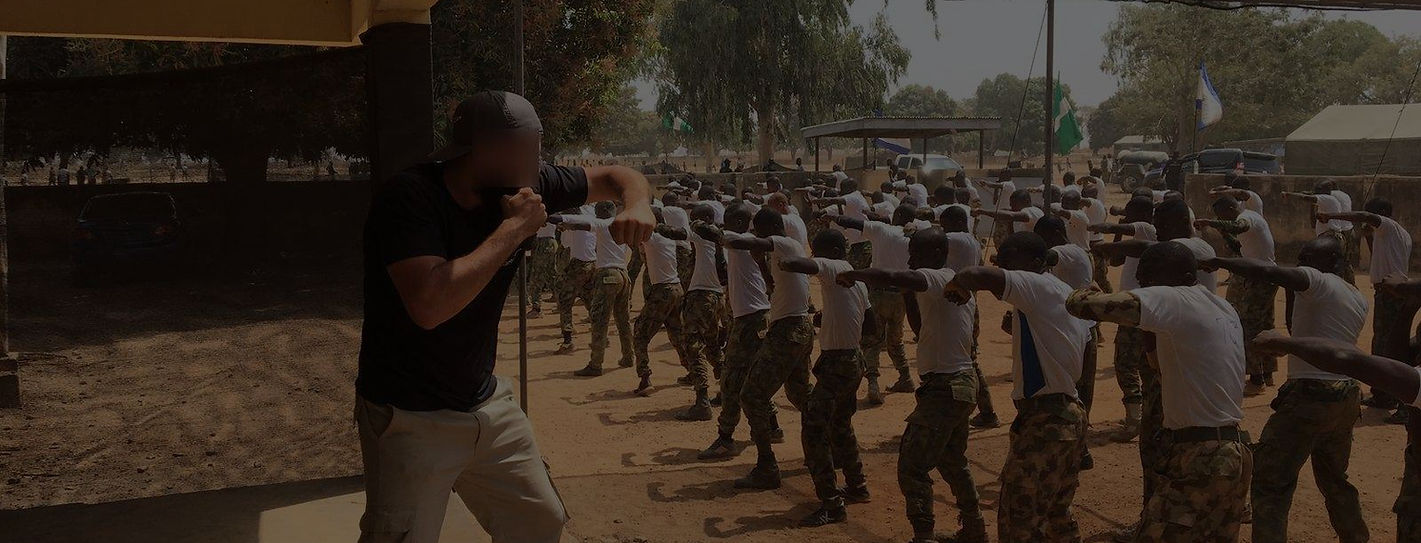
Israeli Security Training / Police / Military / CPO / Worldwide
R&H Global Protection designs organisation-specific security training programmes for government bodies, police organisations, defence teams, professional close protection units, airports, licensed security companies, corporate security departments and other authorised organisations worldwide.
Professional organisational development for law-enforcement, government security, protective and supervisory teams.
Defensive security, force-protection, facility-security and instructor-development programmes for authorised organisations.
Executive protection and CPO development for professional teams responsible for principals, officials and VIPs.
Airport, infrastructure, corporate, hospitality and professional security programmes adapted to the operating environment.
Direct Answer
Service Logic
Professional security training should begin with the commissioning organisation, participant roles, existing capability and the real environment in which the team is expected to operate. A generic public course cannot answer every police, defence, CPO, airport or corporate security requirement.
R&H Global Protection develops custom programmes after reviewing training goals, participant experience, available facilities, programme duration, local requirements and the capability the organisation wants to improve.
Selected Israeli instructors with backgrounds including former IDF Special Forces personnel and former Shin Bet security professionals may be assigned according to the subject. Training remains lawful, defensive, professional and tailored to authorised organisational responsibilities.
Signature Framework
A strong syllabus is built by connecting the people being trained, their mission, their environment and the capability that must improve — before deciding how the programme should be delivered.
The syllabus is a response to organisational requirements, not a catalogue of disconnected modules.
Police officers, protection teams, supervisors, instructors, corporate security staff and other authorised professional groups need different learning outcomes.
People, facilities, infrastructure, aviation operations, official delegations and corporate assets create different training priorities.
Urban, airport, industrial, residential, event, corporate and higher-risk environments change how training should be contextualised.
Awareness, planning, supervision, protective discipline, incident management, risk assessment or instructor capability may be the primary goal.
Classroom learning, practical exercises, scenario management, workshops, assessment and instructor development are combined as appropriate.
Core Capability
Modules can stand alone or be combined into multi-day, multi-week or long-term organisational programmes. The programme remains focused on professional development rather than publishing sensitive operational tactics.
Professional CPO development covering protective planning, advance work, movement management, teamwork, communication, professional conduct and controlled scenario-based learning.
Programmes for teams responsible for executives, officials and other principals, with emphasis on planning, travel security, venue coordination, risk awareness and disciplined protective operations.
Custom development for authorised teams responsible for government officials, diplomats, senior visitors and delegations.
Professional programmes for police organisations, specialist personnel, supervisors, protection teams and instructors within agreed lawful security objectives.
High-level programmes may address force protection, facility security, threat awareness, planning, command coordination and instructor development.
Security awareness, access control, behavioural observation, perimeter awareness, incident management, emergency coordination and vulnerability assessment for appropriate aviation organisations.
Driver development can focus on professional preparation, route planning, vehicle discipline, protective movement, communication and coordination with protection teams.
Security awareness, executive security, workplace security, travel risk, incident management and supervisory development for corporate security departments.
Programmes for suitable operators can address facility protection, access control, security management, threat awareness and crisis coordination.
Management-level training can strengthen planning, escalation, command coordination, crisis decision-making and organisational security governance.
Develop internal instructors through lesson planning, learning objectives, assessment, scenario management, coaching, standardisation and instructor evaluation.
Client Profile
Authorised public-sector security, protective, supervisory and specialist teams requiring structured professional development.
Law-enforcement units, protection teams, supervisors and instructors seeking organisation-specific training.
Defence organisations and authorised security personnel requiring defensive security, protection or instructor programmes.
Professional teams responsible for officials, diplomats, executives, visitors and delegations.
Appropriate airport operators, aviation-security organisations and management teams.
Professional private-security organisations, academies and corporate security providers seeking team or instructor development.
Methodology
The Israeli security approach places strong emphasis on prevention, preparation, awareness, disciplined judgement, coordination and learning from realistic scenarios. The goal is not to create a theatrical course; it is to improve how professional teams understand risk and make decisions within their lawful responsibilities.
Programmes can combine conceptual instruction with practical exercises, workshops, supervised scenarios and assessment. The balance depends on participant level, facilities, the subject and what the commissioning organisation wants to achieve.
Where appropriate, Train-the-Trainer can be integrated so the client builds internal capability and can continue developing its own personnel after the external instructor team leaves.
Operational Focus
For suitable organisations, instructor development can turn one programme into a longer-term internal training capability rather than permanent dependence on external trainers.
Train the organisation’s own instructors to design, deliver, assess and improve professional security training.
Build lessons around clear objectives, participant level, time available and measurable professional outcomes.
Improve presentation, practical instruction, demonstrations, group management and learning flow.
Create fair assessment methods and feedback processes that show whether participants achieved the intended outcomes.
Plan and control professional scenarios so they test judgement and teamwork without becoming uncontrolled demonstrations.
Develop consistent instructor practice, internal coaching and a repeatable organisational training standard.
Engagement Process
Define the commissioning organisation, participant roles, participant numbers and current experience.
Clarify the operational environment, training objectives, capability gaps and required outcomes.
Build the programme structure, learning progression, practical components and assessment approach.
Assign instructors whose professional background fits the subject, participant level and programme goals.
Conduct the agreed programme at a suitable authorised location with appropriate facilities and client coordination.
Review performance, identify development priorities and determine whether follow-on or instructor training is appropriate.
Scale
Focused development around one defined professional subject.
Several connected subjects combined into one structured course.
Broader development with progression, practical work and evaluation.
Training multiple teams or functions inside one organisation.
Develop internal instructors and long-term continuity.
Progressive capability development delivered in agreed stages.
International Capability
Suitable programmes can be delivered at authorised client, government, police, defence, academy, corporate or professional facilities depending on the requirement.
Suitable facilities controlled by the commissioning organisation where the programme can be conducted safely and lawfully.
Authorised public-sector facilities may be used where the organisation has permission and the programme fits the venue.
Professional academy environments can support suitable private-security, CPO or instructor-development programmes.
Corporate security, crisis, risk, executive-security and awareness programmes can be delivered close to client operations.
Instructor teams can be structured for country-specific, regional or multi-stage programmes subject to logistics and local requirements.
Why R&H Global Protection
Prevention, preparation, awareness, disciplined judgement, coordination and scenario-led learning.
Relevant programmes may be staffed by former IDF Special Forces personnel selected for the subject.
Former Shin Bet security professionals may contribute where their background fits the requirement.
The syllabus starts with the client organisation, participant roles and operational objectives.
Selected instructors can deploy to suitable authorised client and professional locations.
Country delivery sits within R&H Global Protection’s broader worldwide security and training capability.
Indicative Investment
Confidential Organisational Planning
Send the organisation, participant number and roles, current experience, training goals, proposed country or city, preferred dates, available facilities, expected programme length and any specialist requirements. We can then review the requirement and prepare an appropriate proposal.
Questions, Answered Plainly
Relevant Security Services