
AMSTERDAM · EXECUTIVE PROTECTION · PRIVATE CLIENTS · SECURE TRAVEL
Bodyguard Services in Amsterdam for Executives, Families & VIP Travel
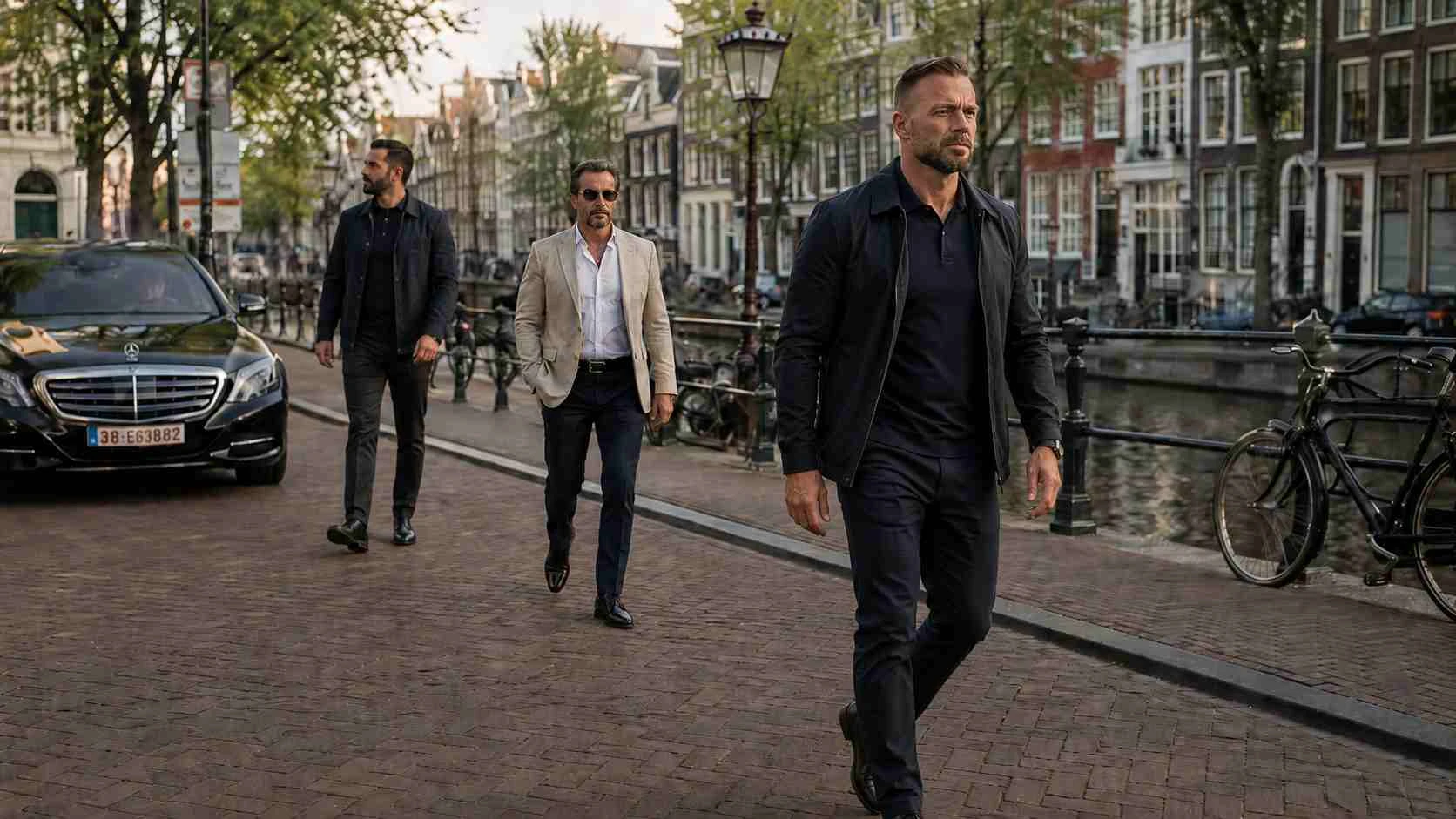
R&H Global Protection plans Amsterdam bodyguard coverage for executives, investors, private families and VIP visitors around the city’s real movement constraints. Schiphol receiving can feed directly into Zuidas meetings, Canal Ring hotels or Museum Quarter appointments, with dedicated driving used where central access makes vehicle handoffs important. Randstad travel, residence duties and event support are scoped as separate stages.
Part of R&H Global Protection’s bodyguard services in the Netherlands and international protection capability.
Amsterdam Personal Protection at a Glance
Amsterdam Airport Schiphol (AMS)Executive and private clients
Discreet protection shaped around investor, technology and finance meetings around Zuidas, with the officer focused on the principal rather than taking over the client’s meetings or host environment.
Hosted and formal appointments
Hosted appointments around Zuidas, the Canal Ring, Museum Quarter and central Amsterdam are approached with a clear handoff: the receiving organisation controls its premises while the CPO manages personal accompaniment.
Family and residence support
Private coverage can follow private-family days around canal-side hotels, residences and Museum Quarter appointments, with residence duties separated when the property itself needs a dedicated security post.
Regional continuity
Onward travel toward the Randstad, The Hague, Rotterdam and onward European travel keeps the client brief but triggers a fresh check of transport, working hours, receiving and locally regulated roles.
Direct answer · hiring a bodyguard in Amsterdam
Can You Hire a Private Bodyguard in Amsterdam?
Yes. An Amsterdam bodyguard programme can be coordinated by R&H Global Protection for finance, technology, family and VIP schedules. The useful starting brief is the AMS arrival, protected people, Zuidas or central-city commitments and any residence or driver requirement. Randstad continuation is planned separately, and Dutch delivery roles are checked for the duties being proposed.
R&H Global Protection · +972-55-9724475 · info@global-protection.net. For Amsterdam, confirm Amsterdam Airport Schiphol (AMS), the protected people, the realistic finish time and any separate driver, family or regional requirement before mobilisation.
Bodyguard · Executive Protection · Close Protection in Amsterdam
What Does a Bodyguard in Amsterdam Cover?
In Amsterdam, the protection plan is built around the principal’s actual day: investor, technology and finance meetings around Zuidas, private-family days around canal-side hotels, residences and Museum Quarter appointments, and receiving through Amsterdam Airport Schiphol (AMS). The bodyguard remains responsible for the named principal while the proposal records the people, hours, transport and supporting resources needed for that specific programme.
Short distances can still produce awkward handoffs when a car cannot remain beside the principal in the historic centre. For that reason, personal protection, driving, host or venue security and any residence post are defined separately. If the itinerary extends into the Randstad, The Hague, Rotterdam and onward European travel, the next stage is reviewed for time, staffing and lawful delivery instead of being treated as an automatic extension.
Amsterdam Protection Planning
Executive Protection in Amsterdam for Business and Private Life
Executive protection in Amsterdam should reflect investor, technology and finance meetings around Zuidas as well as private time. R&H shapes the detail around exposure, confidentiality, host procedures and the movement interfaces created by Amsterdam Airport Schiphol (AMS) and Zuidas, the Canal Ring, Museum Quarter and central Amsterdam.
Respect the environment.
Start with the principal’s real commitments in Amsterdam, then define where personal accompaniment is essential, where a driver takes over, and which hosts control access. Short distances can still produce awkward handoffs when a car cannot remain beside the principal in the historic centre.
Exposure and privacy
Consider visibility, disclosed concerns and the confidentiality of investor, technology and finance meetings around Zuidas. The officer receives only the information required to protect the principal without circulating unnecessary commercial or family detail.
Host and venue boundaries
Entrances, screening and premises security around Zuidas, the Canal Ring, Museum Quarter and central Amsterdam remain with the relevant host or venue. The bodyguard supports the principal through those procedures rather than claiming authority over them.
Driving, household and event roles
Keep the CPO available for the principal while a driver manages vehicle positioning and a separate team covers any residence or event-wide duty. This matters when private-family days around canal-side hotels, residences and Museum Quarter appointments overlap with the business programme.
Regional and international stages
Continuation into the Randstad, The Hague, Rotterdam and onward European travel is rebuilt around the next journey, working period and local requirements. Client preferences can continue, but the original Amsterdam staffing and permissions are not assumed to transfer unchanged.
Amsterdam Protection Services
Close Protection in Amsterdam: Personal and Supporting Services
The Amsterdam service mix should follow the itinerary rather than a fixed package. Use the personal officer for the principal, then add transport, family, residence, event or advance resources only where Zuidas, the Canal Ring, Museum Quarter and central Amsterdam and the actual schedule create a separate need.
Executive bodyguard in Amsterdam
Principal-focused protection for executives and private clients moving through investor, technology and finance meetings around Zuidas. Officer selection follows the client’s visibility, confidentiality needs and duty period rather than a generic overt-security model.
Corporate, delegation and hosted-visit protection
Support for named corporate, hosted or delegation appointments around Zuidas, the Canal Ring, Museum Quarter and central Amsterdam. The receiving organisation keeps control of invitations, screening and premises security while the private detail stays with the principal.
Family and private-client protection
Low-profile protection for private-family days around canal-side hotels, residences and Museum Quarter appointments. If adults, children or staff move independently, additional personal coverage is considered before the programme starts instead of relying on one shared vehicle.
Amsterdam Airport Schiphol (AMS) reception
Protection can begin at Amsterdam Airport Schiphol (AMS) when the flight or rail detail, passenger group, luggage, meeting point, vehicle and first destination are confirmed. Specialist restricted-area access is included only when expressly arranged.
Security drivers and executive vehicles
A dedicated driver can handle receiving, waiting and repositioning around Zuidas, the Canal Ring, Museum Quarter and central Amsterdam while the bodyguard remains free to accompany the principal. Longer stages toward the Randstad, The Hague, Rotterdam and onward European travel are priced against the actual route and hours.
Events and public appearances
Protection can support conference, cultural or public-facing programmes where bicycle and pedestrian density affect vehicle access. The officer protects the named principal; accreditation, crowd control, restricted areas and premises-wide security remain with organisers, hosts or public authorities.
Residential and household integration
If an Amsterdam residence or hotel suite needs security beyond the mobile CPO, fixed-post duties are quoted separately. Household staff, approved visitors and handovers are agreed around private-family days around canal-side hotels, residences and Museum Quarter appointments rather than folded into the personal officer’s role.
Female-officer and language requests
Female-CPO or language requests are matched against the actual Amsterdam client environment. Language needed for the principal may differ from what is needed with hosts around Zuidas, the Canal Ring, Museum Quarter and central Amsterdam, so the proposed individual is checked rather than the whole team being described generically.
Advance, route and venue planning
Advance work for Amsterdam concentrates on the interfaces most likely to disrupt the duty day: Amsterdam Airport Schiphol (AMS), host contacts, walking segments, vehicle rejoin points and schedule changes around Zuidas, the Canal Ring, Museum Quarter and central Amsterdam. Escalation contacts are agreed before the principal reaches them.
Long-term and retained protection
Retained work in Amsterdam is reviewed as routines settle. Familiarity is useful, but new public exposure, family splits or travel into the Randstad, The Hague, Rotterdam and onward European travel can change relief, transport and staffing even when the same principal remains under protection.
Client Profiles
Who Uses Bodyguard Services in Amsterdam?
Amsterdam clients can have very different operating patterns—from investor, technology and finance meetings around Zuidas to private-family days around canal-side hotels, residences and Museum Quarter appointments. These profiles describe likely buying situations so the team can be sized around real responsibilities rather than a standard city package.
Executives and founders
Executives and founders moving through investor, technology and finance meetings around Zuidas who want discreet protection without adding friction to advisers, colleagues or hosts.
Private families
Parents, children or accompanying relatives following private-family days around canal-side hotels, residences and Museum Quarter appointments, with extra officers considered when the group separates.
Family offices
Family-office representatives coordinating Zuidas, the Canal Ring, Museum Quarter and central Amsterdam, drivers, private appointments and sensitive household preferences through one approved contact.
Delegation principals
Named delegation or hosted-visit principals whose personal protection must work around access rules at conference, cultural or public-facing programmes where bicycle and pedestrian density affect vehicle access.
HNW and UHNW visitors
HNW and UHNW visitors balancing privacy, premium hospitality and movement through Zuidas, the Canal Ring, Museum Quarter and central Amsterdam without an unnecessarily visible security footprint.
Public figures and event guests
Public figures or event guests attending conference, cultural or public-facing programmes where bicycle and pedestrian density affect vehicle access and moving between public commitments, private meetings and personal time.
Long-term corporate clients
Executives on retained assignments who need continuity around investor, technology and finance meetings around Zuidas plus realistic relief and periodic review.
Regional travellers
Clients using Amsterdam as a starting point before the Randstad, The Hague, Rotterdam and onward European travel, with each next stage receiving its own transport and local-delivery check.
Israeli-led methodology · Assignment-specific delivery
Protection Planning Adapted to Amsterdam
Planning starts with the reason the principal is in Amsterdam. Investor, technology and finance meetings around Zuidas create a different protection problem from private-family days around canal-side hotels, residences and Museum Quarter appointments; the officer profile and advance work should reflect that difference.
The operating brief maps responsibility before the day begins: who owns host access, who drives, where the officer stays with the principal, and who can approve a material change. In Amsterdam, particular attention is given to Zuidas, the Canal Ring, Museum Quarter and central Amsterdam.
For multi-day or retained work, the team reviews what has changed rather than repeating day one indefinitely. Relief, regional travel toward the Randstad, The Hague, Rotterdam and onward European travel, family splits and new public exposure are incorporated into the next duty plan.
Local Operating Context
Where the Amsterdam Protection Plan Changes
In Amsterdam, local detail matters where it changes access, timing or the distance between principal and vehicle. The plan below focuses on Zuidas, the Canal Ring, Museum Quarter and central Amsterdam and the transitions that actually affect a protected day.
Schiphol to Zuidas
An airport arrival can move directly into meetings. Confirm baggage, first host, driver waiting and the responsibility transfer rather than treating AMS reception as a standalone transfer.
Canal Ring and historic-centre access
Short map distances can still involve pedestrian zones, bicycle traffic and limited curb access. The officer and driver need an agreed drop, walking phase and rejoin point.
Zuidas corporate programmes
Reception procedures, offices and hosted events remain controlled by each organisation. Personal protection works around those rules without claiming premises authority.
Randstad continuation
The Hague, Rotterdam and other Dutch stages change timing and receiving arrangements. Preserve the client brief while reviewing staffing and transport for the next city.
Zuidas · business districts
Meetings, roadshows and executive schedules.
Canal Ring · Museum Quarter
Hotels, residences and discreet family routines.
AMS / Schiphol
Airport receiving and first protected movement.
Central venues · hotels
Principal protection around venue-controlled access.
The Hague · Rotterdam · Randstad
Regional travel with revised timing and resources.
Planning note: these Amsterdam areas describe operating conditions for the client itinerary. They do not imply guaranteed venue access, a local office or authority over host-controlled security.
The Assigned Team
Professional Standards for Your Amsterdam Detail
The people assigned to Amsterdam should fit the client environment, not just a generic security résumé. Review their ability to work around investor, technology and finance meetings around Zuidas, private routines and the local delivery requirements of the actual role.
R&H Global Protection matches Israeli-led planning with Dutch-authorised delivery suited to Zuidas business, Schiphol receiving and the practical vehicle-to-foot transitions of central Amsterdam.
Personnel should be comfortable moving from Zuidas boardrooms to discreet family appointments without changing presentation or tempo.
The provider and assigned personnel are checked for the exact regulated duties; international experience is not treated as a substitute for local authority.
The principal’s working language is confirmed separately from hotel, host and driver liaison so communication needs are matched to the actual programme.
Schiphol receiving and central access constraints make a dedicated driver useful when vehicle positioning and on-foot accompaniment happen at the same time.
Investor meetings, residences and family movements are shared only on a need-to-know basis, with schedule changes coming through the designated client contact.
Duty planning counts airport time, waiting, evening hospitality and Randstad travel; longer programmes use relief rather than stretching one officer across continuous days.
Hiring a Bodyguard in Amsterdam
How to Arrange Close Protection in Amsterdam
For Amsterdam, start with the dates, protected people, Amsterdam Airport Schiphol (AMS) or another arrival point, and the main pattern around Zuidas, the Canal Ring, Museum Quarter and central Amsterdam. That is enough to size an initial option before exact addresses, sensitive concerns or private host details move to a confidential channel.
Describe the requirement
Start with Amsterdam, the dates or approximate duration, number of protected people and the main purpose—such as investor, technology and finance meetings around Zuidas. Add a preferred contact method; sensitive addresses can wait for the private planning stage.
Confirm arrivals and the base
Confirm Amsterdam Airport Schiphol (AMS) when known and identify the broad hotel, residence or first commitment. State whether the driver should remain dedicated after receiving or whether transport is already provided by the client.
Identify split movements
Flag simultaneous needs around Zuidas meetings, Canal Ring appointments and Museum Quarter or family movements. If the principal and family or colleagues separate, size personal protection for those parallel movements before selecting vehicles.
Define supporting responsibilities
Decide which responsibilities are truly separate in Amsterdam: personal accompaniment, vehicle operation, residence coverage, organiser-controlled event security or a regional stage toward the Randstad, The Hague, Rotterdam and onward European travel. The proposal should staff only the duties the client actually needs.
Review people and compliance
Review the proposed officer profile, working language, delivery entity and any role-specific credentials required in the Netherlands. Ask for relevant documentation before commitment when it forms part of your due diligence.
Confirm the written proposal
The written proposal should state the protected people, working period, transport, supporting resources, exclusions and price basis. A material change toward the Randstad, The Hague, Rotterdam and onward European travel is reviewed before it is treated as part of the confirmed deployment.
Amsterdam Service Models
Choose the Right Protection Model in Amsterdam
Choose the Amsterdam model by looking at who actually needs protection, how the day moves through Zuidas, the Canal Ring, Museum Quarter and central Amsterdam, and whether transport, family or regional stages create a second responsibility. Staffing is confirmed against that operating picture.
- Zuidas executive dayOne principal with a meeting-led schedule across Zuidas, central hotels and investor or board appointments.
- Officer + Schiphol driverPersonal protection remains with the principal while a dedicated driver manages AMS receiving, luggage, waiting and city repositioning.
- Founder / investor programmeCoverage for a technology or finance principal moving between investor meetings, dinners and late schedule changes.
- Family + business splitSeparate protection capacity when the principal remains in meetings while family members follow a private Amsterdam programme.
- Public-event detailA named principal protected through an accepted conference, cultural event or appearance while organisers retain venue control.
- Randstad continuityA continuing client brief extended to The Hague, Rotterdam or another confirmed Dutch stage with duty hours and transport reviewed.
Amsterdam Bodyguard Cost · Written Quotations
How Much Does a Bodyguard in Amsterdam Cost?
R&H Global Protection’s indicative Amsterdam planning range is €700–€1,400 per officer per day. The final quotation reflects dates, duty hours, dedicated transport, additional principals and the confirmed city or Randstad programme.
Arrival, meetings, hospitality, private commitments and the agreed final responsibility point.
Public exposure, personal requirements and additional protected people with independent schedules.
Useful assessment, access coordination and preparation agreed for the actual programme.
Vehicle, driver, luggage, waiting, mileage and the requirements of regional travel.
Introductions, relief, management review and separately staffed property functions.
Longer duty periods, deployment expenses, accommodation where required and receiving resources.
Team Configurations for Amsterdam Protection
These configurations describe different responsibilities, not interchangeable price packages. The written proposal identifies the actual personnel, working periods, transport and supporting resources included.
The officer rate is separate from chauffeur/vehicle costs, additional personal officers, extended regional travel, accommodation where required and any separately staffed residence function.
Amsterdam quotes should distinguish business coverage from family movements and driver waiting, particularly when Schiphol, Zuidas and canal-district commitments run on different timings.
To hire a bodyguard in Amsterdam, request a written proposal for the complete requirement, including any simultaneous personal coverage, transport and declared regional stages.
Confirm payment, mobilisation and cancellation conditions before booking. An enquiry does not reserve personnel, guarantee availability or create automatic access to any venue or restricted area.
Request an Amsterdam Bodyguard QuoteLocal and Regional Coverage
Personal Security in Amsterdam and Your Onward Itinerary
Local coverage is planned around Zuidas, the Canal Ring, Museum Quarter and central Amsterdam and the confirmed client programme. Travel into the Randstad, The Hague, Rotterdam and onward European travel is treated as a new operating stage for time, transport, receiving and any applicable delivery requirements.
Amsterdam
The primary Amsterdam operating area covers Zuidas, the Canal Ring, Museum Quarter and central Amsterdam. The team then builds arrival, business, family and hospitality movements around the actual schedule rather than treating the city name as one uniform service zone.
Meetings, roadshows and executive schedules.
Hotels, residences and discreet family routines.
Airport receiving and first protected movement.
Principal protection around venue-controlled access.
Regional travel with revised timing and resources.
Official sources are used to describe the regulatory setting in the Netherlands; they are not an endorsement of R&H or a substitute for checking the proposed provider and individual personnel for the actual Amsterdam assignment.
Why R&H Global Protection
Why Choose R&H Global Protection in Amsterdam?
R&H Global Protection connects Schiphol receiving, Zuidas business schedules, central Amsterdam movements and private-client requirements within one coordinated protection plan. Driver, residence and onward European roles remain separately scoped where the programme requires them.
Schiphol-to-Zuidas continuity
AMS receiving, vehicle positioning and fixed Zuidas appointments are planned as one protected sequence.
Historic-centre practicality
Canal Ring and Museum Quarter movements are planned around realistic vehicle access and clean officer-to-driver handovers.
Corporate and private balance
The same programme can move from investor meetings to discreet family or hospitality commitments without changing the protection objective.
Dedicated driving
A separate driver preserves vehicle readiness while the close protection officer stays with the principal on foot or inside venues.
Dutch delivery checks
R&H Global Protection confirms the provider, personnel and regulated duties for the actual Amsterdam assignment.
European onward planning
Brussels, Paris, London and other onward stages are treated as new delivery legs rather than automatic extensions.
“The purpose of my Amsterdam trip was a series of investor and technology meetings, with several dinners added at short notice. I wanted the security arrangements to remain simple and discreet. The officer stayed closely coordinated with my assistant and driver but did not interfere with the meetings themselves. Even when the itinerary changed significantly, I never felt that the protection arrangements were slowing us down.”
R&H leadership and operating approach · Editorial standards and accountability
International Protection Continuity
Connect Your Amsterdam Assignment to Onward Travel
Amsterdam programmes often continue through the Randstad or into nearby European capitals. R&H Global Protection carries forward the client brief while the receiving city is separately checked for personnel, transport, working time and local authorisation.
Netherlands overview:
Netherlands protection overview.
Relevant protection destinations:
Brussels, Paris, London, Berlin.
More protection destinations:
Monaco, New York, Madrid, Zurich, Milan.
Amsterdam · Confidential Protection Enquiry
Hire a Bodyguard in Amsterdam
For an Amsterdam quote, send the dates, approximate duty period, protected-person count, Amsterdam Airport Schiphol (AMS) or another arrival point, the broad schedule around Zuidas, the Canal Ring, Museum Quarter and central Amsterdam, and whether you need a dedicated driver or parallel family coverage. Keep passports, exact private addresses and detailed threat evidence out of the initial message.
WhatsApp opens a draft you can edit before sending. Use the website contact page instead if you prefer to discuss the Amsterdam requirement without opening a messaging app.
Amsterdam Bodyguard Questions
Frequently Asked Questions About Protection in Amsterdam
These Amsterdam answers cover the issues most likely to affect a real booking: Amsterdam Airport Schiphol (AMS), local movement around Zuidas, the Canal Ring, Museum Quarter and central Amsterdam, drivers, family or event requirements, regulated delivery and continuation toward the Randstad, The Hague, Rotterdam and onward European travel.
How much does a bodyguard in Amsterdam cost?
R&H uses €700–€1,400 per officer / day as the current planning range for Amsterdam. The quote then reflects Amsterdam Airport Schiphol (AMS), the working period, officer count, transport and any family, event or regional stage toward the Randstad, The Hague, Rotterdam and onward European travel.
Can I hire a bodyguard in Amsterdam for a short visit?
A short Amsterdam assignment can be structured around one arrival day, an investor roadshow or a private weekend, provided AMS receiving, the city base and the realistic finish time are known before deployment.
What does executive protection in Amsterdam include?
Executive protection in Amsterdam can connect Zuidas meetings with hotel departures, Canal Ring walking phases and evening hospitality. The officer stays principal-focused while the assistant, driver and host contacts manage their separate responsibilities.
Can protection begin at Amsterdam Airport Schiphol (AMS)?
Yes. Protection can begin at Amsterdam Airport Schiphol (AMS) when the passenger group, baggage, meeting method, vehicle and first protected destination are confirmed. Any airside, FBO or restricted-area service is separate and only included when expressly arranged.
Can R&H arrange a security driver in Amsterdam?
Yes. A dedicated driver is especially useful when AMS, Zuidas and central Amsterdam are combined in one day. The vehicle can reposition for restricted or pedestrian-heavy streets while the close-protection officer remains with the principal.
Can you protect families and children in Amsterdam?
Yes. Family protection in Amsterdam can support private-family days around canal-side hotels, residences and Museum Quarter appointments. If parents, children, carers or staff follow different plans, additional personal officers may be required; child protection supports the security plan and is not childcare.
Can protection support events or public appearances in Amsterdam?
Yes. Protection can support a named principal at conferences, cultural events or public appearances. Accreditation, venue screening and restricted access remain with the organiser, and city-centre vehicle access is planned separately.
Can I arrange long-term protection in Amsterdam?
Yes. A retained Amsterdam arrangement can combine officer matching, introductions, a realistic duty pattern, relief and periodic review. The model is adjusted if business exposure, household routines or travel into the Randstad, The Hague, Rotterdam and onward European travel materially changes.
How are local security requirements handled in Amsterdam?
The provider, proposed personnel and regulated duties are checked for the actual assignment in the Netherlands. International experience is relevant to suitability but does not automatically authorise locally regulated work, armed functions or host-controlled access.
Can the Amsterdam detail continue into regional destinations?
Yes. The same client brief can continue into the Randstad, The Hague or Rotterdam, but transport, working hours and any role-specific local requirements are rechecked for the next stage.