
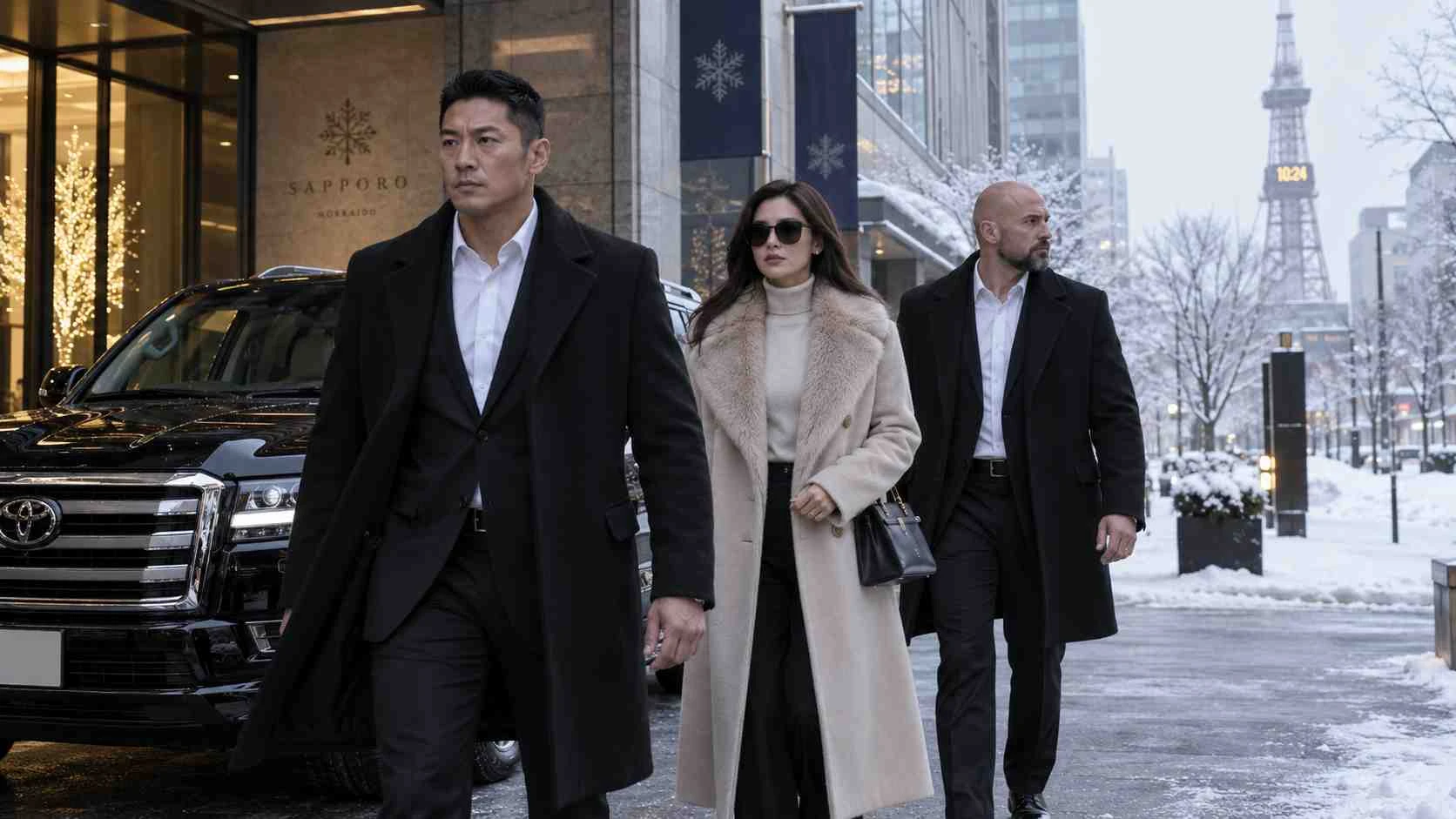
SAPPORO · HOKKAIDO WINTER, FAMILY AND BUSINESS · PRIVATE EXECUTIVE PROTECTION
Bodyguard Services in Sapporo for Winter Resort and Family Travel
R&H Global Protection coordinates discreet bodyguard services in Sapporo for international business owners, travelling private families and winter resort visitors. A confidential brief connects New Chitose Airport (CTS) receiving with Sapporo business meetings, Odori and Susukino evenings and Hokkaido ski excursions. The assignment distinguishes principal protection from the duties of drivers, hosts, industrial operators and separately staffed properties. Long-term work is prioritised and regulated delivery is confirmed before acceptance.
Part of R&H Global Protection’s bodyguard services in Japan and international protection capability.
Sapporo Bodyguard Services at a Glance
New Chitose Airport (CTS) · Odori and central Sapporo businessWinter family stays and Hokkaido executive business programme
R&H separates principal protection from operator, workplace and event obligations during a four-week winter family and business stay in Sapporo and Hokkaido. Formal meetings and hotel receiving require named local hosts and careful taxi or vehicle exits.
Sapporo visitor permissions and host responsibilities
Resort operators, ski instructors and event organisers retain mountain safety, tickets, access and emergency responsibilities. Confirm the principal’s visitor status before moving an officer into a hosted setting.
New Chitose Airport and Sapporo Arrivals
For arrivals through New Chitose Airport (CTS), agree a named driver, luggage handling, landside meeting point and first appointment before travel. The bodyguard remains focused on the principal.
National and regional duty handoffs
CTS and mountain resort transfers need winter-capable drivers, realistic road time and seasonal weather contingencies. Reassess the receiving team, permitted duties and rest periods before a new city or host takes over.
Direct answer · hiring private protection in Sapporo
Can You Hire a Private Bodyguard in Sapporo?
Yes. R&H Global Protection can coordinate discreet bodyguard and executive protection in Sapporo for international business owners, travelling private families and winter resort visitors. The scope can connect Odori and central Sapporo business, Susukino winter dining and events and New Chitose Airport (CTS) receiving. The indicative planning range is $800–$1,500 per officer per day, with vehicles, duty hours and local authorisations set out in a written proposal. Resort operators, ski instructors and event organisers retain mountain safety, tickets, access and emergency responsibilities. Longer assignments are prioritised; shorter programmes are evaluated individually.
R&H Global Protection · +972-55-9724475 · info@global-protection.net. The accepted Sapporo duty specifies client count, locally authorised resources, daily hours, drivers, relief and receiving points.
Bodyguard · Executive Protection · Close Protection in Sapporo
What Does a Bodyguard in Sapporo Cover?
A bodyguard in Sapporo protects the named principal during a four-week winter family and business stay in Sapporo and Hokkaido. The officer follows the confirmed programme through Sapporo business meetings, Odori and Susukino evenings and Hokkaido ski excursions, prepares receiving points, works with the personal assistant and manages public transitions discreetly. The service is organised around actual appointment times, legal duties and the movement of the person being protected, not around a generic event-security package.
Resort operators, ski instructors and event organisers retain mountain safety, tickets, access and emergency responsibilities. Dedicated chauffeurs, static residential personnel, technical supervisors and event security each hold separate responsibilities. Where an itinerary extends beyond Japan, permissions for the next jurisdiction must be reconfirmed. R&H prioritises longer-term contracts, reviewing shorter requested programmes individually through authorised local resources.
Sapporo Protective Planning
Executive Protection for Winter Travel and Families in Sapporo
R&H Global Protection structures the Sapporo protection brief around a real principal and a defined client representative. Visits involving winter family stays and Hokkaido executive business call for privacy, host coordination and accurate vehicle timing; local permits and facility admission are checked separately from the client’s travel schedule.
Clear responsibility.
Agree the principal, decision-making contact, New Chitose Airport (CTS) arrival and every driver handoff before the schedule begins. CTS and mountain resort transfers need winter-capable drivers, realistic road time and seasonal weather contingencies.
Winter Protection Planning for Sapporo and Hokkaido
The principal’s diary is built around Sapporo business meetings, Odori and Susukino evenings and Hokkaido ski excursions. The assistant confirms who hosts each visit, which meetings are private and when public approaches make closer support appropriate.
Host accreditation and controlled premises
Resort operators, ski instructors and event organisers retain mountain safety, tickets, access and emergency responsibilities. Resort operators, hotels and transport providers control property access, winter-sports areas and guest safety.
New Chitose Airport Arrivals and Vehicle Handoffs
CTS and mountain resort transfers need winter-capable drivers, realistic road time and seasonal weather contingencies. Identify a landside receiving location, vehicle capacity and driver finishing time; separate duty hours from the client’s expected meeting duration.
Japan security approval and accountable roles
Japan’s Security Services Act and prefectural Public Safety Commission business recognition must be confirmed for personal protection. Record staff identities and keep industrial, transport and property duties separate from close protection.
Sapporo Close Protection Services
Close Protection in Sapporo: Personal and Supporting Services
The ten capabilities below separate principal protection from transportation, private properties, hosted sites and independent support. For Sapporo, the actual package follows the agreed itinerary for a four-week winter family and business stay in Sapporo and Hokkaido; regulated duties are delivered with appropriately authorised resources, not automatically bundled into one officer fee.
Executive Protection in Sapporo
For international business owners, travelling private families and winter resort visitors, R&H coordinates a principal-focused detail around Sapporo business meetings, Odori and Susukino evenings and Hokkaido ski excursions. The officer follows the person, while business hosts retain site control and drivers handle transportation.
Private Bodyguard and VIP Protection in Sapporo
Private visitors can be met discreetly at New Chitose Airport (CTS) or an agreed public receiving point. The protective posture may be close during crowded movements and less visible inside confidential appointments.
Family Protection in Sapporo
Winter family travel with ski days, children and private dinners can be included when agreed. Independent movements by relatives or a residence that needs a fixed guard are priced and staffed separately.
Female Bodyguard Requests in Sapporo
An appropriate female protection officer or language capability may be requested for Sapporo, subject to authorised local availability, suitability and a defined schedule. A particular profile cannot be guaranteed in advance.
Airport Pickup and Secure Transfers in Sapporo
Airport reception at New Chitose Airport (CTS) requires a confirmed passenger, terminal or exit point, landside meeting position and transfer. Airport operators retain responsibility for restricted terminal areas.
Bodyguard and Security Driver in Sapporo
R&H can coordinate a discreet executive driver and suitable vehicle along CTS arrival, Sapporo city hotel moves and winter-capable resort transfers to Niseko or Rusutsu. Chauffeur duty and the officer’s licensed security role are separately defined in the accepted brief.
Residential and Private Property Coordination in Sapporo
Where a principal uses a hotel, private villa or residence in Sapporo, any fixed guarding post needs its own authorised personnel, shifts and responsibilities. The mobile bodyguard follows the named protected person and cannot guard an empty residence at the same time.
Local Host and Facility Security Responsibilities
Resort operators, ski instructors and event organisers retain mountain safety, tickets, access and emergency responsibilities. The client’s protection officer follows only where the host and applicable regulation permit the role; specialist safety and venue operations remain with their operators.
Protective Advance Planning in Sapporo
An advance review checks CTS arrivals, the first host, Odori and central Sapporo business, time between appointments and a practical final collection. The objective is smooth movement rather than an unnecessarily prominent display.
Long-Term Close Protection in Sapporo
Long-term Sapporo programmes work best with repeatable assistant contacts, verified personnel, scheduled officer rest and realistic driver handoffs. Shorter programmes may be considered individually through authorised local providers.
Sapporo Client Profiles
Who Hires Bodyguards and Executive Protection in Sapporo?
Sapporo protection enquiries frequently involve international business owners, travelling private families and winter resort visitors. Appointments can move from confidential winter family stays and Hokkaido executive business meetings to hotels, private meals or regional journeys. The nature of each client’s work—not just a city name—determines staffing, confidentiality, venue access and driver support.
International business families
Morning business meetings and afternoon skiing must be scheduled as separate phases.
Private resort guests
Family groups splitting ski locations may require additional professional officers.
Visiting company owners
Confidential dinners and executive meetings need discreet accommodation liaison.
Winter event visitors
Street crowds and snow conditions change pedestrian and transport requirements.
Sapporo executive principals
Longer winter family stays and Hokkaido executive business schedules call for confidential planning around Corporate appointments alongside private winter family days. The bodyguard protects the person while the host manages the premises.
Visiting company and family advisers
The principal’s assistant or designated representative helps coordinate CTS receiving, personal preferences and family accommodation, child activity plans and private business appointments while minimising unnecessary disclosure.
Sapporo private hospitality guests
Hotel or private guests can add winter festivals, private family events and corporate appointments to an executive visit, requiring agreed venue entry and discreet driver collection without claiming operator-security powers.
Regional travel and delegation organisers
Organisers planning Niseko, Rusutsu, Furano and other suitable winter resorts need to confirm staff relief, passenger counts, onward transport and permitted local security duties before adding additional protected people.
Israeli-led Protective Methodology
Protection Planning Adapted to Sapporo
A four-week winter family and business stay in Sapporo and Hokkaido requires different decisions at Odori and central Sapporo business, New Chitose Airport receiving and the receiving airport. R&H confirms host contacts, realistic driving time, officer visibility and private information before each substantial part of the visit. A confidential appointment, controlled host visit and public movement call for different levels of visibility and preparation.
R&H maintains one confidential principal plan while locally regulated protection duties are provided only by appropriately authorised resources. Japan’s Security Services Act (警備業法) regulates security businesses; personal and close protection is within the Type 4 (身辺警備) sector. The relevant business recognition, personnel training/eligibility and the scope of the actual duty must be reviewed with prefectural Public Safety Commission rules. Foreign military credentials do not confer Japan security-business status or firearms privileges. Drivers, industrial hosts, hotels and activity operators retain their own responsibilities. Changes in a journey do not create automatic permission for additional regulated security work.
Operating principle
Quiet preparation. Clear responsibility. Flexible execution.- AdvanceConfirm CTS receiving, first host, access procedure and realistic times between Odori and central Sapporo business and other appointments.
- DiscretionLimit the sharing of family accommodation, child activity plans and private business appointments to the named assistant and essential operational team.
- Separate rolesThe officer protects the principal. Resort operators, ski instructors and event organisers retain mountain safety, tickets, access and emergency responsibilities. Drivers and property managers retain their own assigned work.
- AdaptabilityWhen snow and ice, delayed resort movements and changing family ski activities occur, review staff duty, host access, the next receiving point and what the accepted scope can lawfully include.
- ReviewFor longer Sapporo duties, recheck local permissions, officer relief, driving hours and practical contingency arrangements.
Assignment continuity The working brief is updated when a flight, project host, meeting room or onward destination changes in Sapporo. R&H reconfirms accepted security duties, driver availability, staff relief and local legal permissions.
Sapporo Operating Context
Where the Protection Plan Changes in Sapporo
The duty environment in Sapporo is shaped by Sapporo business meetings, Odori and Susukino evenings and Hokkaido ski excursions. The four local operating contexts below show why receiving, host permissions, confidential meetings and onward travel need separate decisions. Named locations are geographic examples, not organisations claiming an R&H partnership.
Odori and central Sapporo business
Formal meetings and hotel receiving require named local hosts and careful taxi or vehicle exits.
Susukino winter dining and events
Crowded evening venues call for proportionate officer proximity and confirmed driver rejoin points.
New Chitose Airport receiving
CTS baggage, passenger count and winter vehicle should be confirmed before the transfer.
Niseko and Rusutsu resort travel
Snow, longer distance and ski schedules require an appropriately equipped driver and specialist activity guides.
Confirm the flight or train details as applicable, baggage, authorised public receiving point and driver contact for New Chitose Airport (CTS) before arrival.
Provide a named host, meeting window and permitted entry location. Formal meetings and hotel receiving require named local hosts and careful taxi or vehicle exits.
Protect the principal around a four-week winter family and business stay in Sapporo and Hokkaido, keeping corporate hosts and specialist operators responsible for their own facilities.
Allow time to move between appointments and confirm the visitor procedure. Crowded evening venues call for proportionate officer proximity and confirmed driver rejoin points.
Before the next departure, review snow and ice, delayed resort movements and changing family ski activities, staff hours, receiving contacts and any new legal jurisdiction.
Planning note: Named places in Sapporo illustrate local operations; they are not endorsements, confirmed premises or guaranteed entry rights. Verify all permissions and staffing with the receiving host.
Sapporo Assigned Team
Professional Standards for Your Sapporo Detail
Sapporo assignments involving winter family stays and Hokkaido executive business benefit from clear personal-security boundaries, independent professional transport and qualified host contacts. R&H keeps the principal brief confidential, assesses duty hours realistically and checks the relevant Japan authorisations before deployment.
One accountable brief. Defined local roles. Resort operators, ski instructors and event organisers retain mountain safety, tickets, access and emergency responsibilities. R&H does not promise event credentials, site entry or local licences that have not been confirmed.
The assigned officer understands the principal’s winter family stays and Hokkaido executive business itinerary and adjusts visibility between public arrivals, quiet meetings and private movements.
Japan’s Security Services Act and prefectural Public Safety Commission business recognition must be confirmed for personal protection. Resort operators, ski instructors and event organisers retain mountain safety, tickets, access and emergency responsibilities.
Protect family accommodation, child activity plans and private business appointments through minimum-access sharing, one accountable client contact and secure travel coordination.
Confirm arrival updates, operator conditions, baggage handling and the vehicle before dispatching security and transport to New Chitose Airport (CTS).
CTS and mountain resort transfers need winter-capable drivers, realistic road time and seasonal weather contingencies. The route is reviewed with the driver and assistant instead of assumed to be an ordinary short city transfer.
Plan named work periods, days off and relief rather than expecting one officer to cover parallel family routes, all-night property security and the next day’s executive duties.
Sapporo / Hiring Process
How to Arrange Close Protection in Sapporo
Provide a confidential outline of the principal, requested assignment duration, CTS arrival, winter family stays and Hokkaido executive business appointments and onward travel. The six steps define client responsibility, lawfully delivered protection and realistic staffing before a service is accepted.
Confidential Brief
Share the names or number of protected people, dates, a description of a four-week winter family and business stay in Sapporo and Hokkaido and any specific threat concerns. Note whether private or family time is separate from work.
Arrival and Driver Plan
Confirm New Chitose Airport (CTS), luggage, public pickup location, vehicle capacity and the first host. Allow enough travel time for the first appointment.
Host Access and Permissions
List the principal’s visits at Odori and central Sapporo business and Susukino winter dining and events. Host operators retain access and safety control; officers must respect the permissions issued.
Duty and Separate Resources
Identify executive, family or team members who may travel independently. R&H defines officer duty windows, relief, driver schedules and any residential or specialist cover.
Itinerary and Handoffs
Plan the onward journey from the actual client calendar. CTS and mountain resort transfers need winter-capable drivers, realistic road time and seasonal weather contingencies. Confirm subsequent receiving points, new venues and overnight arrangements before accepting the full duty.
Local Approval and Proposal
Japan’s Security Services Act and prefectural Public Safety Commission business recognition must be confirmed for personal protection. R&H confirms the available lawful team and provides written pricing, exclusions, logistics and the actual service window. Short-term requests are reviewed individually.
Sapporo Service Models
Choose the Right Protection Model in Sapporo
A single appropriately authorised officer can fit a consistent private or executive diary in Sapporo. Simultaneous travellers, snow and ice, delayed resort movements and changing family ski activities, access-controlled venues or longer duty windows can require separate officers, drivers and host liaison. R&H quotes the work and lawful resources actually required.
The detail follows the protected person through Sapporo business meetings, Odori and Susukino evenings and Hokkaido ski excursions. Drivers, event personnel, property guards and specialist operators remain responsible for their own assigned functions.
- Hokkaido winter, family and business principal dutyThe officer follows a four-week winter family and business stay in Sapporo and Hokkaido and relies on an agreed client contact. Duty hours, travel and any additional principals are recorded explicitly.
- Executive and dedicated security driverSeparate protective and transport roles connect New Chitose Airport (CTS) to the first appointment and onward meetings.
- Private meetings and hosted facilitiesConfirm visitor permissions before moving an executive into Odori and central Sapporo business and Susukino winter dining and events. Private meeting invitations are not transferable access rights.
- Site, event and operator responsibilitiesResort operators, ski instructors and event organisers retain mountain safety, tickets, access and emergency responsibilities. The protection officer never substitutes for the host’s industrial or specialist staff.
- Family or delegation extensionsIf members split between corporate meetings, private activities and separate residences, specify additional licensed personnel rather than dividing one officer across simultaneous duties.
- Niseko, rusutsu, furano and other suitable winter resorts transfersAllow for snow and ice, delayed resort movements and changing family ski activities, any overnight duty relief and the receiving team’s legal permissions before continuing beyond the core Sapporo programme.
Sapporo / Transparent Pricing
How Much Does a Bodyguard in Sapporo Cost?
Bodyguard services in Sapporo have an indicative flat daily planning range of $800–$1,500 per officer for the agreed duty window. Locally authorised personnel, snow and ice, delayed resort movements and changing family ski activities, additional drivers, vehicles, accommodation and specialist duties are scoped separately. Continuous 24-hour coverage requires proper shifts and relief. Longer-term assignments are prioritised.
A written rate covers the accepted Sapporo duty window, confirmed client and actual itinerary. Extended or overnight duties require relief arrangements; a daily figure does not mean unlimited hours. Shorter engagements may be evaluated case by case through authorised local providers, without guaranteed availability.
Parallel meetings, children’s outings or separate delegation routes may require additional professional officers. Staffing follows simultaneous movements and practical rest requirements.
Professional transport covers New Chitose Airport (CTS), passenger numbers, luggage, destination sequence and achievable driving hours. Vehicle type, waiting, parking, fuel and mileage are confirmed separately.
Resort operators, ski instructors and event organisers retain mountain safety, tickets, access and emergency responsibilities. A separate residence post, venue security function, event operator or specialised guide is not included automatically in a mobile officer rate.
Snow and ice, delayed resort movements and changing family ski activities can add driving, another receiving team or accommodation costs. The proposal distinguishes agreed local journeys from later extensions.
Extended winter family stays and Hokkaido executive business programmes may involve mobilisation, flights, accommodation, day-off rotation and relief personnel. Written payment, committed-cost and cancellation terms are confirmed before acceptance.
Team Configurations for Sapporo Protection
An appropriately authorised bodyguard follows the accepted Sapporo executive or private programme; transport may be separate.
An independent driver and protective officer coordinate CTS receiving, appointments and vehicle collection points.
Named family members receive mobile coverage; independently staffed property protection is considered when a residence must remain secured.
Additional officers and vehicles may cover parallel routes or Niseko, Rusutsu, Furano and other suitable winter resorts. Duty windows and legal limits determine the quotation.
Indicative per officer per day in USD. The agreed service window, locally authorised staffing, snow and ice, delayed resort movements and changing family ski activities, chauffeur, travel, accommodation, taxes and separately staffed functions affect the final quotation.
Sapporo Coverage and Compliance
Personal Security in Sapporo and the Wider Itinerary
Coverage in Sapporo follows the business and family itinerary without assuming access to ski facilities, private resorts or event premises. The local contexts below show how winter road travel, separate family plans and venue rules change the protection approach.
Sapporo
Japan’s Security Services Act (警備業法) regulates security businesses; personal and close protection is within the Type 4 (身辺警備) sector. The relevant business recognition, personnel training/eligibility and the scope of the actual duty must be reviewed with prefectural Public Safety Commission rules. Foreign military credentials do not confer Japan security-business status or firearms privileges.
At Odori and central Sapporo business, Formal meetings and hotel receiving require named local hosts and careful taxi or vehicle exits. Confirm an agreed meeting point, host contact and driver return rather than treating the location as a public-access security site.
Around Susukino winter dining and events, Crowded evening venues call for proportionate officer proximity and confirmed driver rejoin points. Resort operators, ski instructors and event organisers retain mountain safety, tickets, access and emergency responsibilities.
For New Chitose Airport receiving, CTS baggage, passenger count and winter vehicle should be confirmed before the transfer. An officer focuses on the principal and the named host retains property and technical duties.
Snow, longer distance and ski schedules require an appropriately equipped driver and specialist activity guides. Vehicle duty, security authorisation and onward receiving must be rechecked when the itinerary changes.
When the principal continues beyond Sapporo, R&H reconfirms the receiving team, working hours and permissions. Permission for a different country is never inferred from a licence held for Japan.
Official source links describe the Japan regulatory framework. They do not certify R&H Global Protection or a local partner. Provider and personnel permissions require operational confirmation for the agreed assignment.
Sapporo / Why R&H Global Protection
Why Choose R&H Global Protection in Sapporo?
A visiting principal in Sapporo may move between Sapporo business meetings, Odori and Susukino evenings and Hokkaido ski excursions. R&H plans protective visibility around those different settings and coordinates closely with the assistant, professional driver and approved local provider while respecting confidentiality and host authority.
Planning for Hokkaido Winter and Executive Travel
Prepare the principal’s movements around Sapporo business meetings, Odori and Susukino evenings and Hokkaido ski excursions; the same officer visibility is not useful at both a quiet executive meeting and a public arrival.
Respect for site and venue host authority
Resort operators, ski instructors and event organisers retain mountain safety, tickets, access and emergency responsibilities. R&H coordinates visitor information with the authorised client representative without claiming exclusive access.
Client confidentiality and limited sharing
Family accommodation, child activity plans and private business appointments are handled through a named assistant, with private addresses and guest lists shared on a need-to-know basis.
New Chitose Airport and Winter Chauffeur Coordination
CTS and mountain resort transfers need winter-capable drivers, realistic road time and seasonal weather contingencies. Separate transport and personal security keep vehicle decisions accountable.
Route adjustments without improvised permissions
Snow and ice, delayed resort movements and changing family ski activities can change travel plans. The team reconfirms hosts, legal duties and achievable officer/driver coverage before adapting.
Licensed Japan service delivery
Japan’s Security Services Act and prefectural Public Safety Commission business recognition must be confirmed for personal protection. R&H does not present foreign military credentials as local authorisation.
“Our family spent four weeks in Sapporo during the winter while I combined several business meetings with a private holiday. Our routine included restaurants, skiing trips outside the city, winter events and family activities, with several evenings spent in busy central areas. R&H Global Protection provided an officer who quickly became familiar with our routine and adapted very well to the winter environment. Weather and snow conditions occasionally changed our plans at short notice, but the team reorganised movements without difficulty. The security remained discreet around the family while longer journeys and crowded winter events were handled more closely.”
International Protection Continuity
Connect Your Sapporo Assignment to Onward Travel
From Sapporo, the client can continue to other Japanese cities or private destinations within an agreed assignment. R&H confirms the next station or airport, driver handoff, officer rest and local permitted protection duties; a visitor credential or special venue permission cannot simply be carried to a different operator.
Related destinations: Japan · Tokyo · Osaka · Kyoto · Paris · London · Monaco · Dubai · Singapore · New York · Milan · Madrid · Zurich · Stockholm · Copenhagen · Prague
Explore International Bodyguard ServicesSapporo · Confidential Protection Enquiry
Hire a Bodyguard in Sapporo
To discuss protection in Sapporo, send the proposed dates, number of people, arrival through CTS, main winter family stays and Hokkaido executive business meetings, hotels, vehicle requirements and any regional or private movements. Explain the desired duration and any facility/venue restrictions. R&H reviews lawful local resources and prepares a written proposal for an accepted assignment. Send sensitive documents only through a secure channel.
Opening WhatsApp drafts an enquiry; it does not confirm a reservation, accepted assignment or payment obligation.
Sapporo Bodyguard Questions
Frequently Asked Questions About Protection in Sapporo
Ten concise answers about $800–$1,500 indicative pricing, the Japan private-security framework, CTS receiving, winter family stays and Hokkaido executive business, drivers, family support and longer assignments.
How much do bodyguard services in Sapporo cost?
R&H Global Protection’s indicative planning range in Sapporo is $800–$1,500 per officer per day in USD. The rate is flat for the agreed duty window, not routine hourly billing. The final proposal considers CTS receiving, winter-ready vehicles, skiing schedules and duty relief; drivers, vehicles, accommodation, residential guarding and additional officers are separately scoped.
Can I arrange professional bodyguard services in Sapporo?
Yes. R&H Global Protection can review discreet executive and private-client protection in Sapporo, subject to the lawful local provider and confirmed staffing. Longer assignments are prioritised. Short event-only or private trips are evaluated individually through authorised local resources, without guaranteed acceptance or same-day deployment.
Are bodyguards in Sapporo armed or unarmed?
Unarmed, low-profile protection is the normal planning position in Sapporo. Firearm carriage is not included automatically and would require a separate assessment of provider, personnel and permitted activity under local law. Previous Israeli military or security experience does not grant foreign firearm privileges.
What licences apply to bodyguard services in Sapporo?
Japan’s Security Services Act (警備業法) includes protection against harm to a person as Type 4 security work (身辺警備). For Sapporo, regulated delivery must be arranged with an appropriately recognised Japanese security business and personnel meeting applicable rules. The relevant prefectural Public Safety Commission oversees security-business recognition. R&H confirms the lawful local delivery model, permitted duties and host access before a protection assignment is accepted; foreign military credentials alone do not confer Japanese security authorisation.
Can protection start at CTS?
R&H can coordinate a security officer and dedicated driver at an authorised public receiving point for New Chitose Airport (CTS). The brief identifies the actual flight or train, terminal or station exit, passenger count and destination. Restricted transport zones remain under their operators’ control; a private bodyguard has no automatic privileged access.
Can R&H arrange a family bodyguard for a winter stay in Sapporo?
Yes. R&H can review discreet protection around a multi-week Sapporo family stay, city meetings, dining and private ski transfers. The itinerary defines which family members are protected and which require additional officers. The security role remains separate from ski instruction, mountain guidance and rescue services.
Can I arrange a bodyguard and a security driver together in Sapporo?
Yes. R&H can coordinate personal protection with a separate professional driver and suitable vehicle for CTS arrival, Sapporo city hotel moves and winter-capable resort transfers to Niseko or Rusutsu. The accepted plan names the officer’s agreed duty window, luggage, passenger count, appointment schedule and pickup points. The chauffeur, transport and vehicle costs are quoted separately.
What is included in winter driving support from CTS to Sapporo?
The transport plan confirms New Chitose Airport (CTS), luggage, winter-capable vehicle, driver experience and realistic road time. Niseko, Rusutsu or other resort transfers may need extra hours and separate accommodation. The bodyguard’s flat daily rate and the chauffeur or vehicle cost are scoped independently.
Can a Sapporo bodyguard accompany my family to Niseko or Rusutsu?
Yes, if the accepted protection plan includes the resort transfer and locally permitted duties. Confirm weather, ski activities, luggage and a named collection point. Qualified ski instructors, patrol and mountain rescue remain responsible for their respective activities; one officer cannot cover separate family groups simultaneously.
How do I request bodyguard services in Sapporo?
Share dates and duration, protected people, CTS travel, winter family stays and Hokkaido executive business appointments, hotels and the desired vehicle or residence scope. R&H checks the authorised local delivery structure and available personnel before preparing a written proposal, including the flat daily officer rate, duty window, logistics and separate services.