
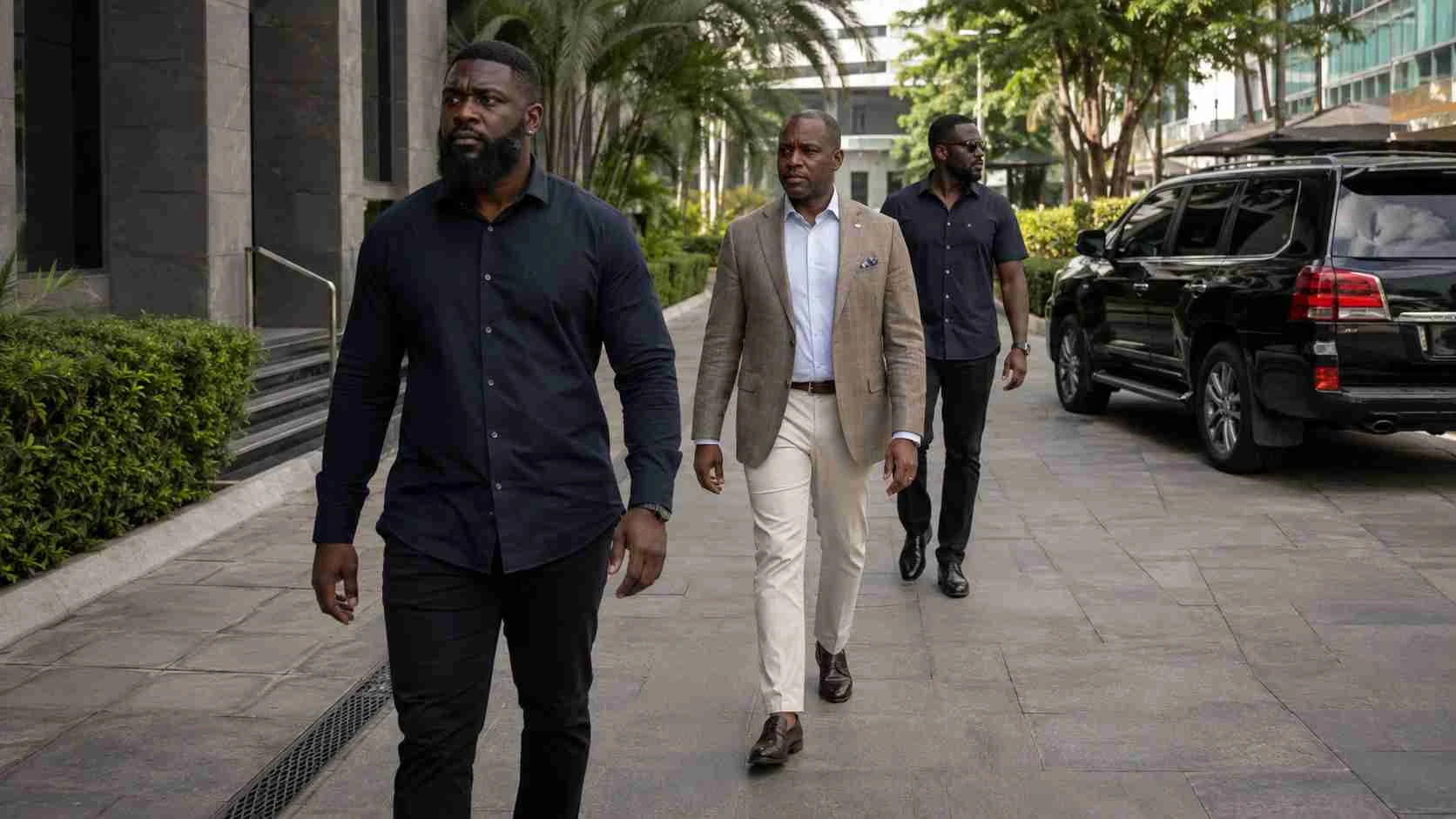
Nigeria · MULTI-CITY EXECUTIVE AND ENERGY PROTECTION · DISCREET PRIVATE PROTECTION
Bodyguard Services in Nigeria for Executive and Energy Travel
R&H Global Protection coordinates discreet bodyguard services in Nigeria for international energy leaders, corporate chairmen, infrastructure investors and private business travellers. Executive protection can support Lagos and Abuja executive meetings, as well as Port Harcourt oil-and-gas, Kano commerce and Ibadan agribusiness. Arrivals via Lagos (LOS), Abuja (ABV) and confirmed Nigerian regional airports, licensed local personnel, approved host access and an independent chauffeur are planned against the principal’s actual itinerary. Private family movements or regional continuation can be integrated when staffing and permissions allow.
Part of R&H Global Protection’s international bodyguard services and discreet client-focused coordination.
Nigeria Bodyguard Services at a Glance
LOS / ABV / PHC arrivals · Lagos airport and corporate headquarters · Abuja official and business meetingsExecutive & Private Visits
Discreet protection for international energy leaders, corporate chairmen, infrastructure investors and private business travellers, with planned meeting transitions, private appointments and clearly agreed officer duty periods.
Host Access & Permissions
Confirm host-controlled corporate compounds, private guard approvals, industrial visitor screening and official site security; the responsible operator issues credentials and enforces facility, venue or government screening rules.
Airport and Executive Receiving
Confirm Lagos (LOS), Abuja (ABV) and confirmed Nigerian regional airports, the arriving party, luggage, lawful collection point, driver contact and first destination before dispatch.
Regional & Onward Travel
Coordinate onward plans toward Lagos, Abuja, Ibadan, Kano, Port Harcourt and international onward travel; reconfirm suitable vehicles, locally eligible officers, travel documents and realistic rest periods.
Direct answer · hiring personal protection in Nigeria
Can You Hire a Private Bodyguard in Nigeria?
Yes. R&H Global Protection can coordinate bodyguard services and executive protection in Nigeria for international energy leaders, corporate chairmen, infrastructure investors and private business travellers. The programme may include Lagos and Abuja executive meetings and Port Harcourt oil-and-gas, Kano commerce and Ibadan agribusiness. Receiving via Lagos (LOS), Abuja (ABV) and confirmed Nigerian regional airports and a driver can be arranged. Rates are USD 700–1,500 per officer per day; vehicles and extra staff are separate. Verify the NSCDC-regulated Nigerian guard company, approved eligible staff and lawful unarmed duty scope before acceptance. Hosts control venue access.
R&H Global Protection · +972-55-9724475 · info@global-protection.net. Every Nigeria assignment confirms the principal, eligible local personnel, duty window, host permissions and vehicle receiving.
Bodyguard · Executive Protection · Close Protection in Nigeria
What Does a Bodyguard in Nigeria Cover?
A professional close-protection officer in Nigeria accompanies the named principal through confirmed business, private or family commitments, helping prepare safe transitions, public-facing activity and the working relationship with a separately assigned driver.
Verify the NSCDC-regulated Nigerian guard company, approved eligible staff and lawful unarmed duty scope before acceptance. Private-security credentials do not override the access, occupational safety, customs, border or emergency responsibilities of public authorities and facility operators.
Nigeria Protective Planning
Executive and Energy Protection Across Nigeria
R&H starts with the named principal, itinerary and authorised operating roles. Lagos airport and corporate headquarters, Abuja official and business meetings and private hospitality can involve very different access, confidentiality and transport conditions. A professional plan confirms those differences before the first movement.
Clear responsibility.
Confirm the arriving party through Lagos (LOS), Abuja (ABV) and confirmed Nigerian regional airports, the lawful pickup point, receiving chauffeur and first named host. The team prepares private, corporate or site entry before travel, without presuming access approval.
Protection Planning for Nigeria Executives and Private Clients
Coordinate Lagos airport and corporate headquarters with Abuja official and business meetings; the assistant shares only meeting times, responsible hosts and necessary arrival instructions.
Venue Permissions and Responsible Host Security
Host-controlled corporate compounds, private guard approvals, industrial visitor screening and official site security remain under the host. Confirm visitor badges, access routes and applicable inductions.
LOS / ABV / PHC Airport and Chauffeur Handoffs
Confirm Lagos (LOS), Abuja (ABV) and confirmed Nigerian regional airports, the public receiving point, luggage, chauffeur and the next approved collection.
Locally Eligible Protection and Programme Continuity
Verify the NSCDC-regulated Nigerian guard company, approved eligible staff and lawful unarmed duty scope before acceptance. Recheck roles when the team or jurisdiction changes.
Nigeria Close Protection Services
Close Protection in Nigeria: Personal and Supporting Services
Ten roles distinguish personal protection from driving, property guarding, venue security and specialist work.
Executive Protection in Nigeria
Principal-focused accompaniment for international energy leaders, corporate chairmen, infrastructure investors and private business travellers through Lagos and Abuja executive meetings, subject to the local authorised provider.
Private Bodyguard and VIP Protection in Nigeria
Discreet VIP receiving via Lagos (LOS), Abuja (ABV) and confirmed Nigerian regional airports and approved appointments, without bypassing official security screening.
Family and Child Protection in Nigeria
Family coverage may require additional personnel when children, relatives and the principal move separately.
Female Bodyguard Requests in Nigeria
Female-officer and language requests are assessed against eligibility and genuine availability.
Airport Receiving and Secure Transfers in Nigeria
Agree the passengers, bags, meeting point and chauffeur for arrival through Lagos (LOS), Abuja (ABV) and confirmed Nigerian regional airports.
Bodyguard and Security Driver in Nigeria
A separate driver can connect Lagos airport and corporate headquarters and Port Harcourt energy and industry, with independent duty and vehicle costs.
Residential and Private Property Coordination in Nigeria
Private property visits are coordinated with the owner; overnight residence guarding needs separate authorised staffing.
Venue Security and Specialist Operator Responsibilities
Host-controlled corporate compounds, private guard approvals, industrial visitor screening and official site security remain controlled by specialist hosts, not a private bodyguard.
Protective Advance Planning in Nigeria
Check Lagos (LOS), Abuja (ABV) and confirmed Nigerian regional airports, venue entries, appointment changes and the final permitted collection.
Long-Term Close Protection in Nigeria
Long-term programmes require documented relief, licence checks, realistic shifts and stable client coordination.
Nigeria Client Profiles
Who Hires Bodyguards and Executive Protection in Nigeria?
Clients include international energy leaders, corporate chairmen, infrastructure investors and private business travellers; team size, permitted access and officer visibility follow the actual schedule.
International energy executives
Discreet receiving for Lagos airport and corporate headquarters can preserve executive privacy without creating unnecessary attention at the host site.
Corporate board members
Lagos and Abuja executive meetings may call for confidential appointments and flexible driver coordination with one named assistant.
Infrastructure investors
Where Abuja official and business meetings overlap with private time, parallel travellers may require separate eligible officers.
Regional project directors
Site access involving host-controlled corporate compounds, private guard approvals, industrial visitor screening and official site security is controlled by the host, not the travelling officer.
Private business families
Investment briefings need restrained visibility, confidential schedules and appropriate arrivals around Lagos airport and corporate headquarters.
International trading delegations
Multiple delegates and vehicles require one passenger plan, named receiving staff and clear duty boundaries.
Technical adviser teams
Family visits require child-aware timing, independent vehicle options and additional cover for split schedules.
Multi-city coordination principals
Longer corporate, energy and regional executive business programmes programmes benefit from stable local staffing, realistic shifts and documented handoffs.
Israeli-Led Protective Methodology
Protection Planning Adapted to Nigeria
In Nigeria, protection changes among Lagos airport and corporate headquarters; Abuja official and business meetings; and Port Harcourt energy-sector appointments. Site permissions, public visibility, confidentiality and transport requirements vary within one client itinerary.
A single confidential brief connects the decision-making assistant, appropriately licensed local personnel, hosts and independent chauffeurs. Responsibilities are agreed before mobilisation and revisited when a schedule changes.
Operating principle
Quiet preparation. Clear responsibility. Flexible execution.- Advance Confirm Lagos (LOS), Abuja (ABV) and confirmed Nigerian regional airports, passenger details, permitted collection and the first responsible host before dispatch.
- Discretion Keep corporate, energy and regional executive business programmes itineraries and principal information limited to the assistant and staff who need it for a defined task.
- Separate roles Host-managed host-controlled corporate compounds, private guard approvals, industrial visitor screening and official site security remain outside the private bodyguard’s authority; official and specialist teams retain responsibility.
- Adaptability Review driver position, next host and duty hours whenever Lagos and Abuja executive meetings or later appointments change.
- Review Long programmes need documented relief, appropriate officer rest and lawful handoffs when new locations are added.
Assignment continuity: an updated Nigeria itinerary triggers a review of eligible local guards, host permissions, vehicle receiving, traveller numbers and realistic working hours before the next movement.
Nigeria Operating Context
Where Nigeria Protection Changes Across Local Appointments
Lagos corporate arrivals, Abuja meetings and Port Harcourt energy-site visits each require different host clearances and transport coordination. Keep private guards’ permitted duties distinct from official security responsibilities across the itinerary.
Lagos corporate and financial business
International receiving and company meeting schedules need named hotel hosts, sensible vehicle waiting and current city conditions.
Abuja federal and commercial appointments
Formal hosts, official gates and private events retain their own access systems; licensed guards do not become public-security officers.
Port Harcourt energy and industry
Oil-and-gas company compounds require security-desk coordination, site visitor controls and an officer role separate from plant security.
Kano and Ibadan regional business
Trade warehouses and agribusiness processing facilities require distinct host approvals, road time and local driver planning.
Confirm Lagos (LOS), Abuja (ABV) and confirmed Nigerian regional airports, passengers, baggage, driver contact and the permitted public meeting point.
Advance Lagos airport and corporate headquarters with the host, agreed entry and next vehicle collection.
Protect the principal at Lagos and Abuja executive meetings; the venue retains its own official security and safety duties.
Allow time for Port Harcourt energy and industry, visitor registration and realistic driver repositioning.
For onward travel toward Lagos, Abuja, Ibadan, Kano, Port Harcourt and international onward travel, verify receiving staff, vehicles and local permissions.
Planning note: Nigeria locations, airports and operating settings are illustrative, not claims of client contracts, guaranteed facility access, pre-verified local licences or specific officer availability.
Nigeria Assigned Team
Professional Standards for Protection in Nigeria
Multi-City Executive and Energy Protection requires capable personal-protection officers, independently responsible drivers and respect for each host’s authority. Regulated tasks are subject to the actual regional requirements.
Before confirming a Nigeria assignment, agree the principal’s itinerary and duty hours; review the required local provider/employee authorisations; check proposed security and driver roles, host permissions, vehicle logistics and relief staffing; then document approved responsibilities and fees in the written proposal.
Officers should understand corporate, energy and regional executive business programmes, from executive meetings to hosted public appointments.
Verify the NSCDC-regulated Nigerian guard company, approved eligible staff and lawful unarmed duty scope before acceptance. Site safety remains with its own operator.
Share confidential schedules only with authorised staff who need the details for their duties.
Confirm Lagos (LOS), Abuja (ABV) and confirmed Nigerian regional airports, permitted arrivals, baggage, driver and first destination.
Allow for host-controlled corporate compounds, private guard approvals, industrial visitor screening and official site security, vehicle waiting and realistic assigned duty periods.
Extended coverage needs adequate rest, authorised relief and clear shift-to-shift responsibility.
Nigeria / Hiring Process
How to Arrange Close Protection in Nigeria
Give R&H the actual Nigeria schedule so legal staffing, arrival receiving, drivers and host access can be agreed before mobilisation.
Confidential Principal Brief
Provide dates, protected people, a named assistant and any important privacy or schedule constraints.
Airport and Executive Vehicle Receiving
Confirm Lagos (LOS), Abuja (ABV) and confirmed Nigerian regional airports, arrivals, luggage, vehicle preference and legal public collection.
Venue, Host and Itinerary Checks
Identify approved hosts at Lagos airport and corporate headquarters and all specialist visitor requirements.
Officer Roles, Relief and Local Authorisation
Specify family splits, officer eligibility, staff rest and independent driving duties.
Route Changes and Onward Handoffs
Plan host-controlled corporate compounds, private guard approvals, industrial visitor screening and official site security, schedule changes and onward travel with confirmed receiving contacts.
Compliance Review and Written Proposal
Check licences, written duty hours, prices and separately quoted vehicles before accepting the assignment.
Nigeria Service Models
Choose the Right Protection Model in Nigeria
The right team depends on the named principal, corporate, energy and regional executive business programmes, locally eligible staff and the working day. Parallel family activities, long road transfers or multiple host sites may call for an independent chauffeur or second officer.
An eligible officer accompanies the named principal through Lagos and Abuja executive meetings, Port Harcourt oil-and-gas, Kano commerce and Ibadan agribusiness. NSCDC-regulated staff, transport partners, corporate security and official hosts retain their own separate legal and operating responsibilities.
- Executive and VIP Protection in NigeriaOne appropriately authorised CPO supports agreed client movements around Lagos airport and corporate headquarters and approved private appointments.
- Bodyguard With Independent Security DriverAn independently contracted chauffeur and vehicle link Lagos (LOS), Abuja (ABV) and confirmed Nigerian regional airports with the next confirmed host, hotel or business location.
- Corporate, Energy and Regional ProgrammesNSCDC-compliant unarmed private guards support principal travel while hosts and officials retain their own security duties.
- Venue, Official and Operator ResponsibilitiesHost-controlled corporate compounds, private guard approvals, industrial visitor screening and official site security are controlled by the site or relevant authority; the travelling CPO does not replace them.
- Family, Delegation and Residential ExtensionsSeparate family or delegation groups and fixed residential posts need specifically authorised resources, staffing and duty hours.
- Regional and Onward Travel From NigeriaBefore travelling toward Lagos, Abuja, Ibadan, Kano, Port Harcourt and international onward travel, confirm the next provider, staff eligibility, vehicle, applicable jurisdictional permissions and relief.
Nigeria / Transparent Pricing
How Much Does a Bodyguard in Nigeria Cost?
Indicative Nigeria pricing is USD 700–1,500 per officer per day for the agreed duty window. A written proposal reflects locally lawful staffing, the principal’s movements and resources requested beyond the officer fee.
The quotation defines the officer’s start, finish, agreed duty period, breaks and relief. A daily officer fee does not buy unlimited 24-hour coverage.
Different family or executive movements can require more eligible officers and vehicles.
The selected sedan, SUV or executive vehicle, rental, separate security driver, airport receiving, luggage capacity and duty hours are priced apart from the officer.
Corporate and industrial hosts retain responsibility for gate credentials, access screening and site safety. Additional fixed-site guarding or official-security requests need separate legal assessment and quotation.
Changes to Lagos and Abuja executive meetings or onward travel can affect staff hours, transport and accommodation.
Extended programmes may need flights, accommodation, meals where agreed, overnight transport, planned officer rest and additional eligible shift relief.
Team Configurations for Nigeria Protection
One properly eligible officer supports the principal through the confirmed Nigeria duty programme.
An appropriately equipped chauffeur and separate vehicle support airport receiving and agreed appointments.
Additional staff can cover split family routines, fixed property duties or larger groups where specifically agreed and licensed.
Travel toward Lagos, Abuja, Ibadan, Kano, Port Harcourt and international onward travel or major events may require extra eligible staff, vehicles and permitted local partners.
Indicative USD range per officer per day for the agreed duty window; executive vehicles, additional staff and travel are separate.
Nigeria Coverage and Compliance
Bodyguard Coverage Across Nigeria and Regional Routes
A national brief can connect Lagos, Abuja, Ibadan, Kano and Port Harcourt using domestic flights and arranged vehicles. Recheck lawful local personnel, airport receiving and regional conditions before each leg; international travel needs a separate plan.
Nigeria
Verify the NSCDC-regulated Nigerian guard company, approved eligible staff and lawful unarmed duty scope before acceptance. Executive transport, official screening and specialist venue access are arranged or checked separately.
Prepare passengers, lawful airport pickup and the first hotel or boardroom transfer around the flight programme.
Coordinate authorised receiving personnel, official hosts and different drivers for Abuja appointments.
Confirm Port Harcourt project hosts, gate permissions, technical-site boundaries and vehicle standby.
Reconfirm routes, legal local guard staffing, air connections and the next corporate or warehouse receiving contact.
A Nigeria-wide executive brief can connect cities while locally licensed guard staffing, provider scope, transport, rest and host access are verified at every phase. Foreign continuation requires a separate receiving jurisdiction and cannot rely on Nigerian private guard approvals. Keep route details and principal identity confidential.
Official guidance informs this Nigeria page. References do not prove that R&H or any proposed partner already holds a specific licence, that an officer is available, or that access to any site is guaranteed. Assignment-specific checks are required.
Nigeria / Why R&H Global Protection
Why Choose R&H Global Protection in Nigeria?
R&H’s published profile describes former Israeli Special Forces and Shin Bet experience and over 20 years of combined team experience. In Nigeria, planning is matched to locally eligible staff and verified host permissions.
Planning for Executive and Private Movements
Office meetings, airport receiving, public events and private time call for different discreet officer positions.
Respect for Host and Specialist Security
The host, police, customs and specialist operators retain their legal and safety duties.
Discreet Client Information Handling
Protect confidential information about corporate, energy and regional executive business programmes with necessary-only client coordination.
Airport and Driver Coordination
Confirm Lagos (LOS), Abuja (ABV) and confirmed Nigerian regional airports, passenger count, driver identity, luggage and permitted vehicle collection.
Programme Changes Without Improvised Access
Changes affecting Lagos airport and corporate headquarters require refreshed venue access and driver instructions.
Locally Eligible Protection and Accountability
Verify the NSCDC-regulated Nigerian guard company, approved eligible staff and lawful unarmed duty scope before acceptance. The signed proposal identifies the actual regulated roles.
“A ten-week programme in Nigeria involved executive meetings, energy-sector appointments and regional travel between Lagos, Abuja and several operational locations. Some days were centred around corporate offices, while others required longer movements and site-related visits. R&H Global Protection coordinated the assignment as one continuous programme and worked closely with local drivers and security partners. The level of protection was adjusted depending on the destination and activity without unnecessarily complicating the business schedule. Continuity across different parts of Nigeria was one of the most valuable aspects of the service.”
R&H leadership and operating approach · Editorial standards · Anonymised protection case studies
International Protection Continuity
Connect Your Nigeria Assignment to Onward Travel
Within Nigeria, a coordinated programme can connect Lagos, Abuja, Ibadan, Kano and Port Harcourt using properly checked local personnel and transport. International onward travel requires separate destination-country checks of lawful security duties, work permissions and receiving teams; Nigerian authorisations do not transfer automatically.
Related destinations: · Lagos · Abuja · Ibadan · Kano · Port Harcourt · London · Dubai · Paris
Explore International Bodyguard ServicesNigeria / Confidential Assignment Brief
Hire a Bodyguard in Nigeria
To arrange protection, provide your dates, protected people, arrival details at Lagos (LOS), Abuja (ABV) and confirmed Nigerian regional airports, main appointments, driver requirements and any host-controlled corporate compounds, private guard approvals, industrial visitor screening and official site security. R&H will assess the eligible officers, separate host duties and written pricing before an assignment is accepted.
Opening WhatsApp drafts an enquiry; it does not confirm a reservation, accepted assignment or payment obligation.
Nigeria Bodyguard Questions
Frequently Asked Questions About Bodyguard Services in Nigeria
Ten direct answers covering USD 700–1,500 daily pricing, lawful local delivery, LOS / ABV / PHC receiving, corporate, energy and regional executive business programmes, executive drivers, restricted hosts and onward travel.
How much does a bodyguard in Nigeria cost?
R&H Global Protection uses an indicative USD 700–1,500 per officer per day in Nigeria for an agreed duty window. Executive vehicles, drivers, extra officers, relief, flights, accommodation and special resources are quoted separately. Final pricing depends on the actual programme and lawful locally eligible staffing.
Can R&H arrange executive protection in Nigeria?
Yes, R&H can review an itinerary for international energy leaders, corporate chairmen, infrastructure investors and private business travellers. An accepted programme requires an appropriate local security company, eligible personnel, practical access permissions and a written duty scope. Longer engagements receive priority, while shorter visits depend on actual availability and commercial acceptance.
Are bodyguards in Nigeria armed?
No. Private guards approved under Nigeria’s Private Guard Companies Act may not carry firearms or ammunition while performing those duties (section 17). Any exceptional public-security protection must comply with current official policy and explicit lawful authorisation; police escorts are not a routine commercial inclusion.
What licences apply to bodyguard services in Nigeria?
Nigeria requires lawful private guard company licensing and approved personnel under the Private Guard Companies Act and NSCDC oversight. Check the proposed company’s current licence, actual employee approval and operating scope. Section 17 prohibits approved private guards from bearing firearms or ammunition on duty. Any public-security request is separate and not guaranteed.
Can protection begin at Lagos (LOS), Abuja (ABV) and confirmed Nigerian regional airports?
Yes, receiving can be planned at a permitted public meeting point after confirming flights, arriving passengers, baggage, driver details and the first stop. Private officers cannot bypass immigration, customs, screening or restricted airport areas. A separate chauffeur and vehicle are quoted as required.
Can protection support corporate, energy and regional executive business programmes in Nigeria?
Yes, subject to confirmed client dates, lawful staffing and each host’s permission. A bodyguard can accompany the principal during Lagos and Abuja executive meetings and Port Harcourt oil-and-gas, Kano commerce and Ibadan agribusiness; security of the site, technical safety and controlled entries remain the responsibility of the competent operator or authority.
Can I combine a bodyguard and an executive driver in Nigeria?
Yes. A suitable independently assigned chauffeur and executive vehicle can be arranged alongside the locally eligible officer. The proposal separates protective duty hours from driving, vehicle rental, fuel, airport collection and additional transport requirements. Larger families or multiple passengers may need more than one vehicle.
What site and access restrictions apply in Nigeria?
Corporate compounds, public facilities, industrial sites and official venues retain their own guards, visitor rules and safety procedures. Nigerian licensed private guards have no police authority and cannot carry firearms on duty. Confirm each host’s gate permissions before the client moves.
Can protection cover several Nigerian cities or continue abroad?
Yes. A coordinated client itinerary may include Lagos, Abuja, Ibadan, Kano, Port Harcourt and regional business locations. Each phase requires a confirmed lawful Nigerian provider, approved unarmed staff, practical vehicles and a receiving host. Any international leg requires separate foreign-country security and work authorisations.
How can I request a bodyguard quotation in Nigeria?
Send dates, duration, protected people, expected arrival via Lagos (LOS), Abuja (ABV) and confirmed Nigerian regional airports, meeting and family plans, host contacts, car preference and any onward travel. Mention host-controlled corporate compounds, private guard approvals, industrial visitor screening and official site security where relevant. R&H can then review lawful resources, staffing, rest, venue responsibilities and separately priced logistics before issuing a proposal.